FILTER

CATEGORIES

ALFABET

A

B

C

Ç

D

E

Ê

F

G

H

I

İ

Î

J

K

L

M

N

O

Ö

P

Q

R

S

Ş

T

U

Ü

Û

V

W

Y

X

Z

CATEGORIES

ALFABET

A

B

C

Ç

D

E

Ê

F

G

H

I

İ

Î

J

K

L

M

N

O

Ö

P

Q

R

S

Ş

T

U

Ü

Û

V

W

Y

X

Z

Transnational Alevism

Transnational Alevism refers to the evolving religious, cultural, and institutional formations of Alevism that have emerged in response to migration, displacement, and diasporic conditions. Rooted…

Dâr (Dâra Durmak, Dâra Çekilmek, Dârdan İndirme, Dâr Kurbanı)

In the Alevi belief system, the concept of dâr represents a multi-layered micro-centre where ritual, ethics, theology, and mythology are intricately interwoven. Functioning as a…

Rızalık in Alevism: Dual Interpretations, Communal Practice, and Social Transformation

Rızalık (mutual agreement), commonly translated as mutual consent, approval, reconciliation or contentment, is a central ethical and ritual principle in Alevism. This entry examines Rızalık…

Deyiş

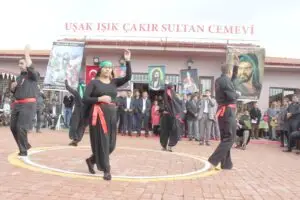
In Alevi-Bektashi culture, deyiş are a form of folk literature recited spontaneously and accompanied only by the bağlama during cem ceremonies, alongside the semah, and…

Food in Alevism

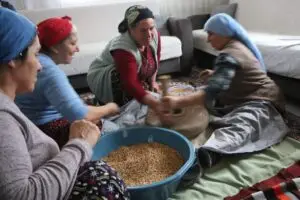
Social activities pertaining to food such as cooking, sharing, eating and fasting are central to the expression of the lived religiosities of Alevis in Turkey,…

Roman (Gypsy) Alevis

Groups with diverse ethno-cultural characteristics such as “Rom”, “Dom”, “Lom”, and “Blacksmith” communities largely use the term “Roman” in order to reduce the effects of…

Dedes: Transformation of Religious Leadership in the Alevi Community

This entry examines the transformation of dedes—hereditary male religious leaders in Alevism—in response to migration, urbanization, and institutionalization since the 1990s. Traditionally embedded in rural…

Cem Ritual and Psychological Well-Being: A Social Identity Perspective

This entry examines the historical and contemporary experiences of exclusion faced by Alevis through the framework of the Social Identity Approach in social psychology, with…

The Institution of Analık in Alevism

Analık, as a socio-religious role in Alevism, constitutes a significant component of the traditional and social structure of the Alevi belief system. It plays a…

Zazaki in the Context of Alevism

This entry examines the function of Zazaki (Kırmancki) within the Alevi religious world, particularly centred on Dersim. Zazaki plays an important role in Alevism not…

Alevi Organization and the Ocak System

In this video, Pir Mahmut Ütebay examines the relationship between the traditional Ocak system and contemporary Alevi institutions operating in Turkey and in the European...

The Ocak System in Alevism

In this video, Pir Mahmut Ütebay discusses the Ocak system, which constitutes a foundational pillar of the Alevi belief structure. The historical origins of Ocaks,...
Aradığınız yazar sistemimizde henüz yer almıyor ya da filtreler sonucu daraltmış olabilir.
Try another keyword or simplify the filters.
Scroll to Top

Donate Now

Learn How to Donate to the Alevi Encyclopedia! Financial contributions to the Alevi Encyclopedia are used for its general expenses with the approval of the Rıza Şehri Academy.