FILTER

CATEGORIES

ALFABET

A

B

C

Ç

D

E

Ê

F

G

H

I

İ

Î

J

K

L

M

N

O

Ö

P

Q

R

S

Ş

T

U

Ü

Û

V

W

Y

X

Z

CATEGORIES

ALFABET

A

B

C

Ç

D

E

Ê

F

G

H

I

İ

Î

J

K

L

M

N

O

Ö

P

Q

R

S

Ş

T

U

Ü

Û

V

W

Y

X

Z

The Institution of Analık in Alevism

Analık, as a socio-religious role in Alevism, constitutes a significant component of the traditional and social structure of the Alevi belief system. It plays a…

Space in Alevism

This entry examines the phenomenon of space in Alevism through its intellectual, physical, and social dimensions. It argues that space is not merely a geographical…

Indigeneity and Alevism

This entry examines Alevism as an indigenous identity within Turkey’s ethnically and religiously diverse context. Historically one of the most contested concepts in the region,…

Alevism and Social Trauma

This entry examines how Alevi identity has been shaped through the framework of historical trauma and collective memory, and how it is narrated especially in…

Alevism Lessons in British Schools: Inclusion through Religious Education

This entry demonstrates the importance of education as a space for inclusive strategies to integrate minoritised and excluded communities like Alevis and give them a…

Theological Foundations of Human Dignity in Alevism

This entry examines the theological foundations of the God–human relationship in Alevism by approaching the concept of human dignity through the perspectives of creation theology…

Necropolitical Violence and Alevis

The concept of necropolitical violence offers valuable potential for clarifying the meaning and significance of the Alevi community’s status as an oppressed minority and its…

Zazaki in the Context of Alevism

This entry examines the function of Zazaki (Kırmancki) within the Alevi religious world, particularly centred on Dersim. Zazaki plays an important role in Alevism not…

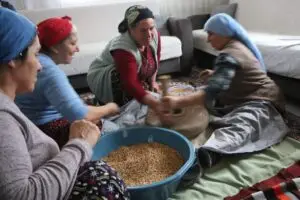
Food in Alevism

Social activities pertaining to food such as cooking, sharing, eating and fasting are central to the expression of the lived religiosities of Alevis in Turkey,…

Social Justice and Alevis: Multidimensional Identity, Forgiveness, and Solidarity

The current contribution explores the multifaceted nature of Alevi identity and its influence on forgiveness, collective action, and responses to intergroup conflict. Alevism, characterized by…

The Kırklar, Selflessness, and Equality in Alevism

In this video, Baba Sedat Bican discusses the phenomenon of the Kırklar (The Forty), one of the most central concepts and foundational narratives of Alevi...

Kurban in Alevism

In this video, Baba Sedat Bican discusses the concept of kurban in Alevism through its religious, symbolic, and ritual dimensions. He explains that, within the...

The Belief in Devriye, “May the Cycle Continue” (Devri Daim Olsun), and the Phenomenon of Death in Alevism

In this video, Pir Ecevit Emre explains the concept of devriye, one of the most important cosmological notions in the Alevi belief system, through the...

Alevism and Devriye: Death and “devri daim olsun”

Note: This interview was conducted in German. In this video, Pir Ecevit Emre discusses devriye, an important concept in Alevism. The discussion brings together death,...

The Doctrine of the Four Gates and Forty Stations in Alevism (Şeriat, Tarikat, Marifet, Hakikat)

In this video, Pir Ecevit Emre discusses the doctrine of the “Four Gates and Forty Stations” (4 Kapı 40 Makam), one of the foundational teachings...

Kirvelik and Musahiplik in Alevism

In this video, Pir Hasan Aygün explains the concepts of kirvelik and musahiplik, which occupy an important place in the social and religious order of...

Alevis and the Cem Ritual: Meaning, Structure, and Transformation

Note: This recording was made in German. In this video, Pir Müslüm Aktar discusses the cem ritual in Alevism. He explains what a cem is,...

The Cult of Ana Fatma in Alevism

In this video, Pir Hasan Aygün speaks about Ana Fatma, one of the most central symbolic figures in Alevism. Aygün interprets Ana Fatma not only...

The Four Elements, Çar Anasır, the Four Gates and Forty Stations in Alevism

In this video, Pir Hasan Aygün explains the concept of Çar Anasır, which frequently appears in Alevism, through the four basic elements of nature: air,...

Awakening and Sealing the Delil/Çerağ: Number Symbolism in Alevism

In this video, Pir Hasan Aygün explains the practice of awakening the delil, which holds a central place in Alevi rituals, and the religious meanings...
Aradığınız yazar sistemimizde henüz yer almıyor ya da filtreler sonucu daraltmış olabilir.
Try another keyword or simplify the filters.
Scroll to Top

Donate Now

Learn How to Donate to the Alevi Encyclopedia! Financial contributions to the Alevi Encyclopedia are used for its general expenses with the approval of the Rıza Şehri Academy.