FILTER

CATEGORIES

ALFABET

A

B

C

Ç

D

E

Ê

F

G

H

I

İ

Î

J

K

L

M

N

O

Ö

P

Q

R

S

Ş

T

U

Ü

Û

V

W

Y

X

Z

CATEGORIES

ALFABET

A

B

C

Ç

D

E

Ê

F

G

H

I

İ

Î

J

K

L

M

N

O

Ö

P

Q

R

S

Ş

T

U

Ü

Û

V

W

Y

X

Z

Alevis’ Struggles for Rights: A Human Rights Law Perspective

This entry examines Alevis’ struggles for rights in Turkey within the framework of freedom of religion and conscience, the right to education, and the prohibition…

Alevi Studies and Syncretism

Syncretism refers to the formation of new religious or cultural expressions that emerge from the interaction of diverse belief systems and practices. While in academic…

Rızalık in Alevism: Dual Interpretations, Communal Practice, and Social Transformation

Rızalık (mutual agreement), commonly translated as mutual consent, approval, reconciliation or contentment, is a central ethical and ritual principle in Alevism. This entry examines Rızalık…

Transnational Alevism

Transnational Alevism refers to the evolving religious, cultural, and institutional formations of Alevism that have emerged in response to migration, displacement, and diasporic conditions. Rooted…

Alevism and Social Trauma

This entry examines how Alevi identity has been shaped through the framework of historical trauma and collective memory, and how it is narrated especially in…

Deyiş

In Alevi-Bektashi culture, deyiş are a form of folk literature recited spontaneously and accompanied only by the bağlama during cem ceremonies, alongside the semah, and…

Alevi Studies and Debates on "Orthodoxy" & "Heterodoxy"

Orthodoxy refers to the official and dominant interpretation of a religion, while heterodoxy defines belief systems that deviate from or are marginalised by that norm….
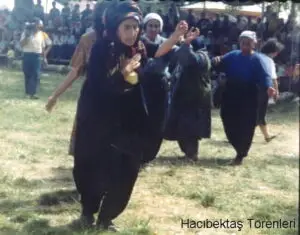
Yasli kadinlar Haci Bektas Veli anma senlikleri sirasinda semah donuyor.

Women in Alevism: Between Ritual, Authority and Lived Experience

The position of women in Alevism is shaped by the interaction of cosmology, ritual practice, religious authority, everyday lived experience and broader social conditions. Alevi…

The Institution of Analık in Alevism

Analık, as a socio-religious role in Alevism, constitutes a significant component of the traditional and social structure of the Alevi belief system. It plays a…

Dâr (Dâra Durmak, Dâra Çekilmek, Dârdan İndirme, Dâr Kurbanı)

In the Alevi belief system, the concept of dâr represents a multi-layered micro-centre where ritual, ethics, theology, and mythology are intricately interwoven. Functioning as a…
Aradığınız video sistemimizde henüz yer almıyor ya da filtreler sonucu daraltmış olabilir.
Try another keyword or simplify the filters.
Aradığınız yazar sistemimizde henüz yer almıyor ya da filtreler sonucu daraltmış olabilir.
Try another keyword or simplify the filters.
Scroll to Top

Donate Now

Learn How to Donate to the Alevi Encyclopedia! Financial contributions to the Alevi Encyclopedia are used for its general expenses with the approval of the Rıza Şehri Academy.