FILTER

CATEGORIES

ALFABET

A

B

C

Ç

D

E

Ê

F

G

H

I

İ

Î

J

K

L

M

N

O

Ö

P

Q

R

S

Ş

T

U

Ü

Û

V

W

Y

X

Z

CATEGORIES

ALFABET

A

B

C

Ç

D

E

Ê

F

G

H

I

İ

Î

J

K

L

M

N

O

Ö

P

Q

R

S

Ş

T

U

Ü

Û

V

W

Y

X

Z

Rızalık in Alevism: Dual Interpretations, Communal Practice, and Social Transformation

Rızalık (mutual agreement), commonly translated as mutual consent, approval, reconciliation or contentment, is a central ethical and ritual principle in Alevism. This entry examines Rızalık…

Kırkbudak - Journal of Anatolian Folk Beliefs (2005-2007)

Kırkbudak – Journal for the Study of Anatolian Folk Beliefs, published between 2005 and 2007, holds the distinction of being the first peer-reviewed academic journal…

Şavak Tribe: Alevi–Sunni Nomadic Community of Dersim

The Şavak tribe occupies a distinctive position within the ethno-cultural mosaic of Dersim, both historically and sociologically. As one of the rare cases in which…

Transnational Alevism

Transnational Alevism refers to the evolving religious, cultural, and institutional formations of Alevism that have emerged in response to migration, displacement, and diasporic conditions. Rooted…

The Diversity of the Alevi Diaspora

Alevis have migrated to European countries through different migration patterns such as guest workers, the Maras Massacre, the 1980 military coup, as students, through marriage…

Alevi Studies and Debates on "Orthodoxy" & "Heterodoxy"

Orthodoxy refers to the official and dominant interpretation of a religion, while heterodoxy defines belief systems that deviate from or are marginalised by that norm….

Dedes: Transformation of Religious Leadership in the Alevi Community

This entry examines the transformation of dedes—hereditary male religious leaders in Alevism—in response to migration, urbanization, and institutionalization since the 1990s. Traditionally embedded in rural…

Seyit Rıza Monument (Dersim)

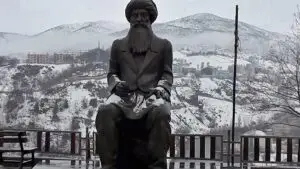
The Seyit Rıza Monument is a significant site of memory that renders visible, both symbolically and spatially, the place of the 1937–38 Dersim Massacre within…

Alevi Studies and Syncretism

Syncretism refers to the formation of new religious or cultural expressions that emerge from the interaction of diverse belief systems and practices. While in academic…

Dersim: Genocides (1914-18 & 1937-38)

This entry examines the 1937–38 Dersim massacres as a case of genocide, placing the events within a broader continuum of state-led exterminatory violence in late…

Xızır (Hızır), Kırmancki Deyiş, Dersim Alevism (Raa Haqi)

In this video, Pir Ahmet Karabulut examines the central cosmological, ethical, and social roles of Xızır within the tradition of Dersim Alevism (Raa Haqi). He...
Aradığınız yazar sistemimizde henüz yer almıyor ya da filtreler sonucu daraltmış olabilir.
Try another keyword or simplify the filters.
Scroll to Top

Donate Now

Learn How to Donate to the Alevi Encyclopedia! Financial contributions to the Alevi Encyclopedia are used for its general expenses with the approval of the Rıza Şehri Academy.