Ras el Seni and Kıddes in Arab Alevism
Ras el Seni[1]
Among Arab Alevis, there are many celebrations, ceremonies, and festivals that sustain collective memory and social togetherness. Ras el Seni is one of them and may be rendered in Turkish as “New Year.” Ras el Seni falls on January 14 according to the Gregorian calendar and on January 1 according to the Rumi calendar, that is, the first day of the year. Celebrated in a festive atmosphere, Ras el Seni may be regarded as one of the symbols of social transmission, customs, and traditions. Some time before this date, lengthy and gradual preparations are made, and foods specific to the day are prepared. These foods are offered to visiting guests and relatives.
On this date, Hrise, regarded in Arab Alevism as one of the most special and sacred foods of the festivals, is also prepared and distributed, and family members, neighbors, and relatives visit one another. Those who are far away are called and exchanged greetings, one of which is expressed as follows: “Ras el Seni mbarek 3aleykoun, ila dinna va imanna. Koul 3am bi elf kheyr“[2] (Happy New Year to you; may it be blessed for our religion and our faith. May every year be with a thousandfold peace and خير [goodness].)
Celebratory Foods and Practices
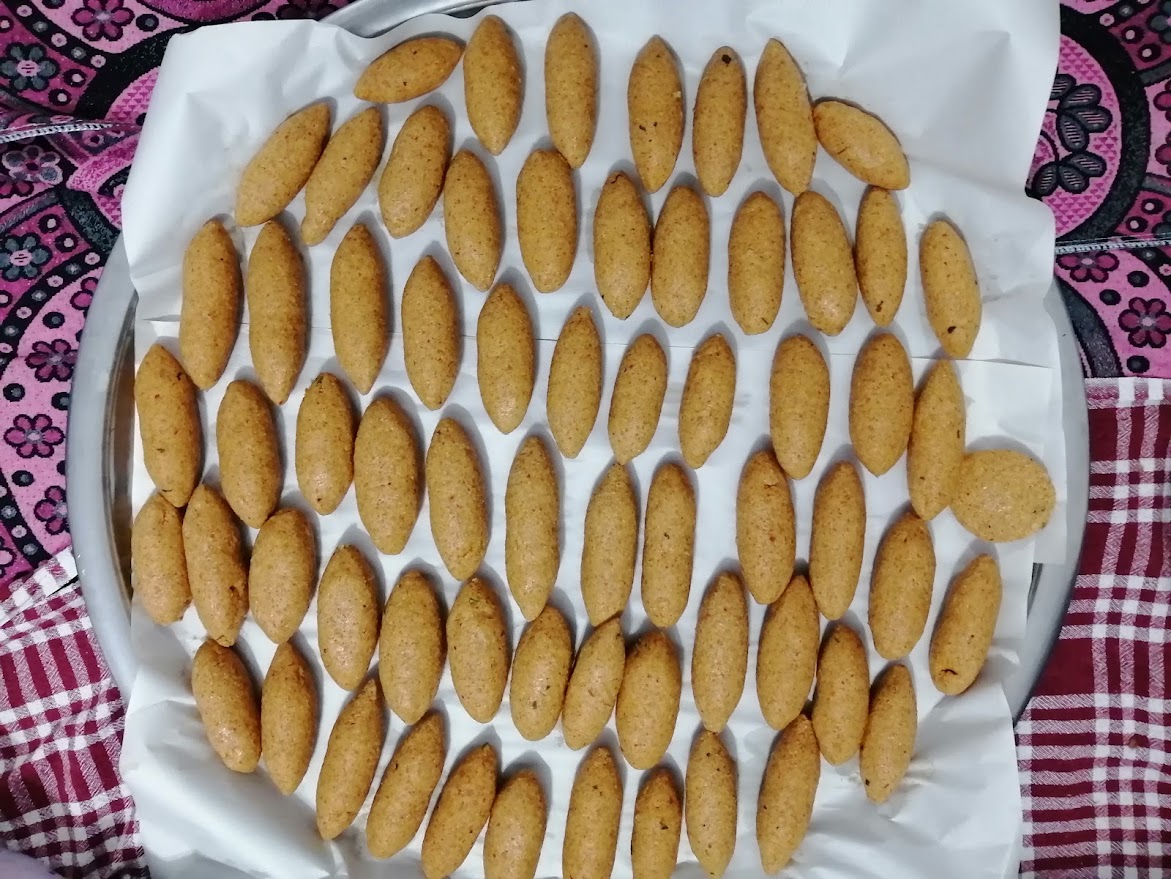
Arab Alevis who come together for celebration and festive greetings prepare large tables with foods specific to this day, such as Hrise (a dish made by pounding and cooking meat and wheat for many hours in large cauldrons over a wood fire with large spoons), Kibbeh (stuffed meatballs), Biberli Ekmek (spiced flatbread), Ma3moul (a kind of spiced festive cookie), Ka3ke (Antakya pastry, a kind of spiced bun), Hriset el Louvz (a kind of semolina dessert with different versions), Zleybe and Sambouske (fried dough with different versions, which may be preferred either filled, such as with meat, or unfilled), candied pumpkin dessert, Moushabbak (ring-shaped dessert), and Kaytaz pastry. These tables constitute a mosaic-like example of sharing and cultural transmission. Young children kiss the hands of their elders, and children are given pocket money and sweets.
Sacred places (ziyara-visitation sites) are circumambulated, or people enter the visitation site where bakhkhur, a type of incense, is burned inside; prayers are offered and wishes are made so that the year may pass well and bring peace and health.
Kıddes
Ras el Seni is celebrated by Arab Alevis in Antakya, Adana, and Mersin in Turkey. The practices, rituals, traditional foods, and visits carried out throughout this celebration are also performed by some members of the community-in certain villages and regions-on the day of Kıddes, which falls five days after Ras el Seni, on January 19 according to the Gregorian calendar. While Ras el Seni symbolizes deliverance from the ظلم [oppression] of Pharaoh, the new year, and the beginning of the era of Moses, Kıddes is the day on which Jesus was baptized in the Jordan River and symbolizes abundance and purification. On the day of Kıddes, alongside practices similar to those of Ras el Seni, there are also different applications. For example, on the night of Kıddes, soil is scattered onto olive trees so that they may be abundant. In addition, basil (blueberry leaf), olive leaves, and bay leaves are placed in a bowl of water at night, and hair is combed in the morning with the water in this bowl; it is believed that the hair will become abundant and healthy.
It is also believed that, during the baptism of Jesus, birds and the olive and fig trees bore witness to it and prostrated themselves. For this reason, it is thought that every year on the day of Kıddes, olive and fig trees remain in prostration throughout the night. According to the narrative, because it is believed that the trees that prostrate at night will stand upright again in the morning, animals and similar things are not tied to their branches.
Conclusion
Both Ras el Seni and Kıddes are examples of coming together, of cultural and faith-based commonalities, of social celebrations, collective memory, and symbolic rituals. Ras el Seni is celebrated on January 14 according to the Gregorian calendar, while Kıddes is celebrated on January 19. During these celebrations, tables are prepared, festive greetings are exchanged, and certain rituals are performed. These may be considered reflections of the role of shared tables and narratives in sustaining and transmitting social togetherness, of the importance of wishes and sustained traditions in the construction of identity and belief, and of shared sacredness.
Bulut, Halil İbrahim. 2011. “Tarih, İnanç, Kültür ve Dini Ritüelleriyle Nusayrilik.” Ortadoğu Yıllığı cilt 7, sa 7, 579-614.
Kiremit, İlker. 2012. XIX. Yüzyılda Nusayriler (Arap Alevileri), Yüksek Lisans Tezi, Hacettepe Üniversitesi.
License information
© The Author(s). Unless otherwise stated, entries published in the Alevi Encyclopedia are licensed under a Creative Commons Attribution 4.0 International License.