Sociology of Emotions and Collective Memory in the Deyişes of Pir Sultan Abdal
* This entry was originally written in Turkish.
Pir Sultan Abdal is one of the most important poets of the Alevi tradition and lived in the sixteenth century. His deyişs have held a central place in the collective memory of the Alevi community for centuries and have been transmitted from generation to generation. This entry examines the deyişs of Pir Sultan Abdal within the frameworks of the sociology of emotions and theories of collective memory.The sociology of emotions is a field that explores how emotions are shaped by social and cultural factors (Hochschild 1997; Ahmed 2016). Collective memory, on the other hand, refers to the process through which social groups share, preserve, and transmit common memories (Halbwachs 1992). The deyişs of Pir Sultan Abdal are situated at the intersection of these two perspectives.
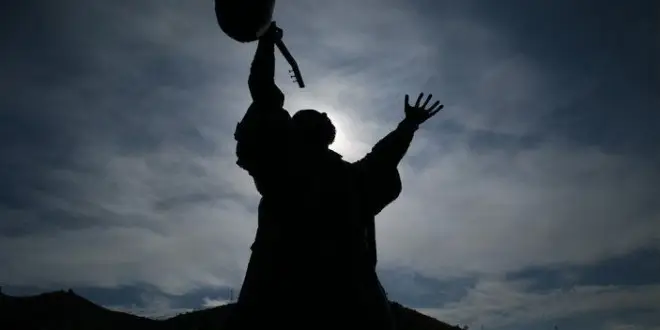
On the one hand, the deyişs recall the shared past and core values of the Alevi community. On the other hand, they express emotions such as love, rebellion, justice, and freedom in a powerful and direct manner. The deyişs of Pir Sultan Abdal are generally performed with the bağlama and are most commonly associated with the Hüseyni and Nevruz makams. There is a close relationship between musical structure and symbolic meaning.
Symbols frequently encountered in the deyişs, such as “Ali,” “Hak,” “gül,” “dost,” and “Haydar,” point to key concepts within the Alevi belief system. When combined with musical form, these symbols create recurring patterns that leave lasting traces in collective memory. The main themes addressed in Pir Sultan Abdal’s deyişs include devotion to Ali, rebellion against social injustice, resistance to oppressive authority, and mystical love. These themes are not merely individual emotions but also reflect the shared emotional experiences of the Alevi community.
The life story of Pir Sultan Abdal, who was executed as a result of the oppression he faced during the Ottoman period, adds an additional layer of emotional depth to his deyişs. Music plays a central role in both Alevi rituals and everyday life. The deyişs performed during cem rituals emotionally connect community members and reinforce collective identity. From a sociological perspective, this entry analyses how the deyişs of Pir Sultan Abdal shape the emotional world and collective memory of the Alevi community.
Pir Sultan Abdal
Pir Sultan Abdal was born in the sixteenth century in the village of Banaz, located in the Yıldızeli district of Sivas. His real name is understood to have been Haydar, based on his poems and oral narratives. Although there is no definitive information about his life, it is estimated that he was born between 1510 and 1514 (Bezirci 1986, 26). In his poetry, he addressed themes such as love, rebellion, justice, and social problems.
Pir Sultan Abdal called on the people of Anatolia to rise up against the Ottoman administration of his time. The language he used in his poems is simple and accessible, which enabled his deyişs to reach wide segments of the population. Because of his resistance to the pressures of the Ottoman state, he was arrested by the governor of Sivas, Hızır Paşa, and was executed between 1589 and 1590 (Kaya 2023, 443).
The works of Pir Sultan Abdal are significant for their reflection of the culture and everyday life of the Anatolian people. His poetry conveys the Alevi belief system, mystical ideas, and contemporary social issues. In his deyişs, themes such as the role of Hz. Ali in the spread of Islam, the arrival of Hacı Bektaş Veli and the Kırklar in Anatolia, and the resilience of the Alevi faith are frequently addressed. For example, the deyiş “Şah-ı Merdan Ali kurdu bu yolu” emphasises the leadership of Hz. Ali, while the deyiş “Kırkların serdarı Şah Kızıl Deli” expresses the strength and continuity of the Alevi belief tradition.
Sociology of Emotions and the Relationship with Music
The sociology of emotions, in its most basic sense, examines how emotions are shaped by social and cultural factors (Hochschild 1997; Bericat 2016). Emotions are not merely individual experiences; they are also influenced by the social and cultural contexts in which people live. For example, the ways in which pain is experienced and expressed are shaped by social norms and cultural traditions (Hochschild 2002).
Hochschild’s approach to the sociology of emotions provides an important framework for understanding the emotional dimension of music (Hochschild 1983). According to this perspective, emotions are neither purely natural nor spontaneous; rather, they are shaped and regulated by social norms. In Alevi rituals, emotions such as sorrow, anger, and solidarity are organised through collective rules. Members of the community learn how to feel and how to express these emotions within shared ritual settings.
The relationship between music and emotion has long attracted the attention of sociologists. Music is a universal language with the power to evoke a wide range of emotions in listeners. It can touch the deepest feelings, from joy and happiness to sadness and grief, and connect individuals to their emotions and lived experiences (DeNora 2004). Sociological studies have also explored the role of music in shaping emotions and social relations, including its capacity to bring people together or, in some contexts, to produce social divisions.
Alevi deyişs have a strong connection to the sociology of emotions. These deyişs are not only forms of artistic expression; they also function as a means of transmitting social and cultural values, as well as expressing emotions and feelings related to personal experiences and collective identity. Alevi deyişs are generally characterised by intense emotional content, with lyrics and melodies designed to evoke strong and deep emotional responses (Gezik 2014).
In Alevi culture, deyişs are frequently performed during cem rituals, which hold a central place in communal religious life (Irmak and Hamarat 2018). During these cems, the emotional intensity of the deyişs is heightened through the collective experience of singing and listening to mersiyes together. In this sense, these melodies function not only as musical forms but also as instruments for creating social bonds and strengthening collective identity.
Collective Memory and Musical Narrative
Collective memory refers to the process through which a group of individuals shares and transmits memories related to past experiences (Halbwachs 1992). Social factors such as culture, values, and ideologies play a significant role in shaping this process (Wagoner 2015, 144). Collective memory may include both positive and negative memories, which can be mobilised to strengthen feelings of unity and solidarity within a group.
Music can play a crucial role in collective remembering. It may be used to revive shared memories, express emotions, and create a sense of common identity among groups of people. In the context of Alevilik, music is used to evoke shared memories related to the history and culture of the Alevi people. Alevi music also serves as a medium for expressing emotions associated with collective remembering (Tol and Ritchie 2015).
The deyişs of Pir Sultan Abdal constitute an important part of Anatolia’s collective memory. In his deyişs, the history, culture, and traditions of Anatolia are vividly narrated. For example, the deyiş “Şah-ı Merdan Ali kurdu bu yolu” emphasises the role of Hz. Ali in the spread of Islam. The deyiş “Güvercin donunda gördüm oturur” recounts the miracles of Balım Sultan.
In the deyişs of Pir Sultan Abdal, events and figures that played a significant role throughout Anatolian history are frequently narrated. The deyiş “Kırklar Rum eline sökün eyledi” describes the arrival of Hacı Bektaş Veli and the Kırklar in Anatolia. Similarly, the deyiş “Tanrı’nın Allah’ın Arslanı Ali nurdandır” highlights the recognition of Hz. Ali as a leading figure in Islam. Through these deyişs, the rich cultural and traditional values of Anatolia are conveyed in a vivid and enduring manner.
The deyişs of Pir Sultan Abdal have contributed to keeping the past, culture, and values of the Anatolian people alive. By recalling significant events and figures embedded in popular memory, these deyişs have played an important role in shaping collective memory. As Erdal Gezik asks, “With the exception of a few, these elderly people rarely held books in their hands-where did they acquire their knowledge of the past? Why did these events, lived in distant places and distant times and transmitted orally, continue to excite them so deeply?” This question is highly meaningful in understanding the role of deyişs in the formation of collective memory (Gezik 2014, 36).
Emotional Themes in the Deyişs of Pir Sultan Abdal
The deyişs of Pir Sultan Abdal reflect the emotional world of the Anatolian people. In his deyişs, universal emotions such as love, affection, justice, and freedom are prominently expressed. For example, the deyiş “Bir derdim var idi şimdi elli oldu” gives voice to the oppression and suffering experienced by Pir Sultan Abdal. Similarly, the deyiş “Kırkların serdarı Şah Kızıl Deli” expresses the resilience and strength of the Alevi belief tradition.
The sociology of emotions is clearly visible in the deyişs of Pir Sultan Abdal. His poetry vividly conveys the shared emotions of the Anatolian people. The deyiş “Bir derdim var idi şimdi elli oldu” articulates experiences of injustice and oppression, while “Kırkların serdarı Şah Kızıl Deli” reflects a collective search for justice and freedom. In this sense, these deyişs function as expressions of socially shared emotions rather than purely individual feelings.
The deyişs of Pir Sultan Abdal have helped the Anatolian people articulate their emotions. Feelings such as joy, pain, anger, and hope, experienced collectively, are vividly conveyed in his poetry. From this perspective, the deyişs of Pir Sultan Abdal provide important insights into the sociology of emotions of the Anatolian population.
In Alevi deyişs, emotions such as love, unity, and social justice are actively transmitted. In doing so, they reinforce these principles within the Alevi belief community and encourage a shared sense of collective identity (Gölpınarlı 2010, 26). Another way in which music shapes emotions in Alevilik is by offering Alevis a means to express their religious commitment and to establish a connection with the divine.
Musical Structure and Symbolic Relations
The deyişs of Pir Sultan Abdal are generally performed in the Hüseyni and Nevruz makams. According to musical analysis, the most frequently encountered modal pattern in Pir Sultan Abdal’s deyişs is the “Hüseyni + Nevruz” combination (Demir 2022). This modal structure reflects key characteristics of Alevi music.
The symbols frequently encountered in the deyişs point to the core concepts of the Alevi belief system. Among the most commonly used symbols are Hak (9 references), gül (6 references), dost (5 references), and Ali and Haydar (4 references each). These symbols combine with musical structure to form established and recognisable patterns.
For example, in the deyiş “Güzel aşık cevrimizi çekemezsin demedim mi,” symbols such as Ali, can, dem, derviş, gömlek, Hak, lokma, muhabbet, Rıza, and yol are employed. In the deyiş titled Duazı İmam, symbols such as Allah, Muhammed, medet, Ali, Hacı Bektaş Veli, dergâh, and Hak invoke the lineage of the Twelve Imams. These symbols are not merely linguistic signs; they constitute fundamental elements of Alevi cosmology and belief.
One of the main reasons music has become an object of analysis in the social sciences is that it points to layers of meaning that extend beyond its aesthetic qualities and structural elements. In this sense, music refers to meanings beyond its formal characteristics and gains significance as a form of behaviour and communication within the established patterns created in the contexts in which it is performed.
Conclusion
The deyişs of Pir Sultan Abdal play a central role in the collective remembering and transmission of Alevi culture and identity. From the perspective of the sociology of emotions, these deyişs reflect not only individual feelings but also the collective emotional experiences of the Alevi community. Themes such as love, rebellion, justice, and freedom have articulated shared emotions within Alevi society for centuries.
When examined through the lens of collective memory theory, the deyişs of Pir Sultan Abdal emerge as powerful narratives that recall the shared past and values of the Alevi people. Devotion to Hz. Ali, the arrival of Hacı Bektaş Veli and the Kırklar in Anatolia, and resistance against oppressive authority have left deep traces in social memory. These narratives are transmitted from generation to generation through oral culture and function as foundational elements of Alevi identity.
The strong relationship between musical structure and symbolic meaning enhances the impact of Pir Sultan Abdal’s deyişs. Performed in the Hüseyni and Nevruz makams, these deyişs strengthen social bonds during cem rituals and reinforce collective identity. Symbols such as Ali, Hak, gül, and dost, when combined with musical structure, form the conceptual map of the Alevi belief system.
The oppression experienced by Pir Sultan Abdal during his lifetime, culminating in his execution, adds an additional layer of emotional depth to his deyişs. His story of resistance is not merely a historical event but also a symbolic expression of the consciousness of oppression and the enduring search for justice. For this reason, Pir Sultan Abdal is regarded by the Alevi community not only as a poet but also as a symbol of resistance and the struggle for freedom.
In conclusion, the deyişs of Pir Sultan Abdal constitute one of the most important sources of Alevi culture from the perspectives of the sociology of emotions and collective memory. These deyişs shape the emotional world of the Alevi community, strengthen shared identity, and ensure the transmission of cultural heritage from generation to generation.
Ahmed, Sara. 2016. Mutluluk Vaadi. Çeviren Deniz Mayadağ. İstanbul: Sel Yayıncılık.
Bericat, Eduardo. 2016. “The Sociology of Emotions: Four Decades of Progress.” Current Sociology 64 (3): 491-513.
Bezirci, Asım. 1986. Pir Sultan. İstanbul: Evrensel Basım Yayın.
Demir, Ali Eren. 2022. “Gündelik Hayat Sosyolojisi Bağlamında Müzik Dinleme Pratikleri ve Spotify Uygulaması.” Haliç Üniversitesi Sosyal Bilimler Dergisi 5 (1).
DeNora, Tia. 2004. Music in Everyday Life. Cambridge: Cambridge University Press.
Gezik, Erdal. 2014. Dinsel, Etnik ve Politik Sorunlar Bağlamında Alevi Kürtler. İstanbul: İletişim Yayınları.
Gölpınarlı, Abdülbaki. 2010. Alevi Bektaşi Nefesleri. İstanbul: İnkılap Kitabevi.
Halbwachs, Maurice. 1992. On Collective Memory. Chicago: University of Chicago Press.
Hochschild, Arlie Russell. 1997. “Emotions in Social Life.” İçinde The Sociology of Emotion as a Way of Seeing, 31-44. London: Routledge.
Hochschild, Arlie Russell. 2002. “The Sociology of Emotion as a Way of Seeing.” İçinde Emotions in Social Life, derleyen Gillian Bendelow ve Simon J. Williams, 31-44. London: Routledge.
Irmak, Yılmaz ve Handan Hamarat. 2018. “Bingöl Aleviliğinde Dedelik, Musahiplik, Düşkünlük ve Cem.” Bingöl Üniversitesi Sosyal Bilimler Enstitüsü Dergisi 8 (15): 211-232.
Kaya, Kıymet. 2023. “Pir Sultan’ın Deyişlerinde Kültürel Belleğin İzleri.” Korkut Ata Türkiyat Araştırmaları Dergisi 11.
Van den Tol, Annemieke J. M. ve Timothy Ritchie. 2015. “Emotion, Memory and Music: A Critical Review and Recommendations for Future Research.” İçinde Music, Memory and Autobiography: An Interdisciplinary Approach, 16-32. Oxford: Oxford University Press.
Wagoner, Brady. 2015. “Collective Remembering as a Process of Social Representation.” İçinde The Cambridge Handbook of Social Representations, derleyen Eleni Andreouli, George Gaskell, Gordon Sammut ve Jaan Valsiner, 143-162. Cambridge: Cambridge University Press.