The Kerbela Narrative and Collective Mourning: Traumatic Memory and Ritualised Emotions in Alevî Identity
* This entry was originally written in Turkish.
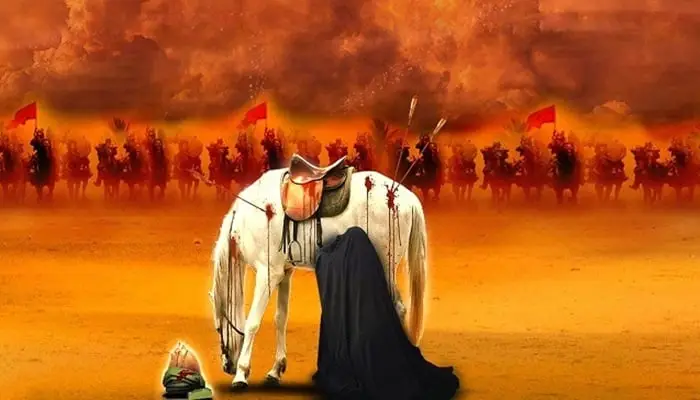
The Kerbela narrative constitutes a central element of traumatic memory in Alevî belief and identity. The killing of Hz. Hüseyin, the grandson of Hz. Muhammed, by the Umayyad army in the desert of Kerbela in Iraq in 61 AH (680 CE) has left deep and lasting traces in Alevî collective memory. This event is not remembered merely as a historical incident; it is continuously re-enacted through ritualised practices of mourning across generations and has become a foundational pillar of collective identity (Yıldırım 2020, 156–158).The Kerbela narrative forms the source of a shared consciousness of oppression, the pursuit of justice, and a culture of resistance among Alevîs. From the perspective of the sociology of emotions, the Kerbela narrative represents a socially produced and regulated practice of mourning. When analysed through Hochschild’s concept of emotional labour, Alevî rituals function as mechanisms that shape individual emotions according to social norms (Hochschild 1983). Mourning rituals performed during the month of Muharrem draw individuals into a collective experience of sorrow and thereby reinforce social solidarity.
Mersiyes and deyişs recited during cem rituals transmit the trauma of Kerbela from generation to generation (Markussen 2012). Halbwachs’s theory of collective memory helps explain how the Kerbela narrative becomes a shared social memory (Halbwachs 1992). Individual acts of remembering always take place within social frameworks. Even generations who never experienced the events of Kerbela directly internalise this trauma through ritual practices, as if it were part of their own lived experience.
Alexander’s conceptualisation of cultural trauma further clarifies this process by emphasising that trauma is not simply a directly experienced event but a socially constructed one (Alexander 2004). The Kerbela narrative is continuously reproduced and kept alive by Alevî dedeler, ozans, and the wider community. It does not merely recall the past; it also provides a source of legitimacy for struggles against contemporary forms of injustice.
Kerbela and Its Place in Alevî Memory
Kerbela is one of the most traumatic events in Islamic history. Following the death of Hz. Muhammed, the question of the caliphate led to deep divisions within the Islamic community. Groups who believed that Hz. Ali and his lineage held the rightful claim to leadership resisted Umayyad rule. Hz. Hüseyin emerged as one of the symbolic leaders of this resistance (Halm 2004). In 61 AH, Hz. Hüseyin set out towards Kufa with his family and a small group of supporters. However, they were surrounded by the Umayyad army in the desert of Kerbela and were deprived of access to water. After a ten-day siege, Hz. Hüseyin and his companions were killed, and his family was taken captive. This event became a profound source of trauma in the Islamic world, particularly for Shi’i and Alevî communities (Ayoub 1978).
For Alevîs, Kerbela does not signify only the martyrdom of Hz. Hüseyin; it represents the defeat of justice and truth in the face of oppression. Yet this defeat is also interpreted as a moral and spiritual victory. Hz. Hüseyin refused to submit to tyrannical power and chose death instead. This stance resonates with the Alevî ideals of erlik (moral courage) and yiğitlik (bravery) (Dressler 2013, 89-91). The Kerbela narrative thus emphasises the righteousness of the oppressed and the eventual condemnation of the oppressors.
In Alevî rituals, the Kerbela narrative occupies a central place. The month of Muharrem holds special significance, as it marks the martyrdom of Hz. Hüseyin. During this period, Alevîs observe fasting, recite Kerbela mersiyes in cem rituals, and engage in collective mourning. The story of Kerbela is not transmitted merely as historical knowledge; it is conveyed with intense emotional force that deeply affects those who listen. In deyişs, the suffering of Hz. Hüseyin due to thirst, the captivity of his family, and the apparent triumph of oppression are vividly narrated (Shankland 2003, 78-79).
Traumatic Memory: The Past Living in the Present
In the literature on trauma studies, the ways in which traumatic events are experienced at both individual and collective levels have long been debated. According to Caruth, trauma is not an event that remains in the past; rather, it is an experience that is continuously re-lived in the present (Caruth 1996, 4-5). Traumatic memory is not simply about remembering but about repeatedly re-experiencing the event. This perspective is crucial for understanding the place of the Kerbela narrative in Alevî memory.
By developing the concept of cultural trauma, Alexander explains the social construction of trauma (Alexander 2004, 1-30). From this perspective, events do not become traumatic on their own; instead, social groups interpret and code them as trauma. The events of Kerbela could initially have been perceived as one of many conflicts in Islamic history. However, within Shi’i and Alevî traditions, this event acquired profound symbolic meaning and became a foundational element of collective identity.
Halbwachs’s theory of collective memory illustrates how this process operates (Halbwachs 1992). Individuals remember the past through social frameworks. When the Alevî community recalls Kerbela, it constructs a shared memory through the stories narrated by dedes, the recitation of deyişs, and the performance of rituals. This memory is not merely a cognitive process; it is also an emotional experience. When Kerbela is narrated, listeners collectively experience emotions such as sorrow, anger, and solidarity.
Connerton’s concept of bodily memory helps explain how the Kerbela narrative is transmitted from generation to generation (Connerton 1989). Written texts and oral narratives are important, but bodily practices function as the most powerful carriers of memory. Fasting during the month of Muharrem, acts of prostration during cem rituals, and the performance of semah reinforce social memory through the body. Bodies thus reproduce the trauma of Kerbela and transmit it to new generations.
Eyerman, in conceptualising cultural trauma, emphasises the role of intellectuals and religious leaders as carriers of trauma (Eyerman 2001). Alevî dedes and ozans serve as key transmitters of the Kerbela narrative. They do not merely repeat this story; they interpret and update it. The injustice experienced at Kerbela is linked to contemporary forms of injustice, thereby creating a bridge between past and present.
Ritualised Mourning: Muharrem and Cem
Durkheim argues that rituals reinforce social solidarity and strengthen collective consciousness (Durkheim 1965). In Alevî rituals, the Kerbela narrative occupies a central place and is transformed into a socially organised practice of mourning. The month of Muharrem is the period during which Kerbela is commemorated and collective mourning is observed.
During Muharrem, Alevîs fast for twelve days. This fast is not merely a physical restriction; it represents a form of spiritual purification and an expression of respect for Hz. Hüseyin. Throughout this period, meat is not consumed, weddings are avoided, and entertainment gatherings are suspended (Yıldırım 2020, 158). The community enters a state of collective sorrow. This sorrow is not individual but socially regulated and ritualised.
The recitation of Kerbela mersiyes during cem rituals constitutes the most intense moment of ritualised mourning. These mersiyes narrate the suffering endured by Hz. Hüseyin, the tragedy of his family, and the brutality of oppression. The narratives are emotionally powerful and have a profound impact on listeners. Through laments and deyişs, the trauma of Kerbela is re-enacted and made present once again (Markussen 2012, 89-91).
Turner’s concept of liminality is useful for understanding the distinctive character of cem rituals (Turner 1969). During the cem, everyday social hierarchies are temporarily suspended, and community members come together as equals. In this liminal state, emotional intensity reaches its peak. When the Kerbela narrative is shared within this liminal space, strong bonds are formed among participants. Collective mourning thus transforms individual grief into a shared social experience.
Rituals of mourning also have a therapeutic function. Freud’s theory of mourning focuses on the reorganisation of the relationship with the lost object at the individual level (Freud 1917). At the collective level, however, mourning rituals enable the community to confront and process its traumatic past. Each annual retelling of the Kerbela narrative allows the community to rework and reinterpret the trauma. This process does not produce endless mourning; rather, it renders the trauma livable by integrating it into collective identity.
Collective Mourning and Identity Construction
The Kerbela narrative plays a central role in the construction of Alevî identity. Collective mourning is not only about remembering the past; it is also about producing a sense of “we” and drawing social boundaries. Anderson’s concept of “imagined communities” helps to explain this process (Anderson 1983). Nations and social groups imagine themselves through shared narratives and symbols. Kerbela constitutes a shared trauma for Alevîs, and this trauma functions as a force that holds the community together.
Assmann’s theory of cultural memory demonstrates that the Kerbela narrative functions as a founding myth (Assmann 1995). Cultural memory consists of narratives that define and legitimise the identity of a social group. For Alevîs, Kerbela represents such a foundational narrative. It provides answers to the questions “who are we?” and “what do we believe in?”. The stance of Hz. Hüseyin in favour of justice forms the moral core of Alevî ethics.
The Kerbela narrative also operates as a mechanism of differentiation. The distinction between “us” and “them” becomes particularly visible in this narrative. Hz. Hüseyin and his family represent “us,” while Yezid and his army represent “them.” This binary opposition does not belong solely to the past; it continues into the present. The struggle between the oppressed and the oppressors, between those who possess rights and those who violate them, extends from Kerbela to contemporary times (Dressler 2013, 92-93).
While collective mourning reinforces identity, it also keeps social memory alive. In this respect, Nora’s concept of lieux de mémoire is particularly relevant (Nora 1989). Kerbela is not only a physical location but also a symbolic site of memory. Each year, the Alevî community reconstructs Kerbela through ritual practices. The cem space becomes a symbolic representation of Kerbela, allowing a distant past to be re-enacted in the present.
Collective mourning has also played an important role in processes of politicisation. Particularly during the twentieth century, when Alevîs faced similar forms of injustice, the Kerbela narrative was used as a source of political legitimacy. Events such as the Madımak, Çorum, and Maraş massacres were interpreted through the lens of Kerbela trauma (Massicard 2013). The expression “what happened in Kerbela is happening here as well” creates a bridge between past and present. In this context, collective mourning is transformed into a form of social resistance.
Sociology of Emotions Perspective
Hochschild’s approach to the sociology of emotions provides an important framework for understanding the emotional dimension of the Kerbela narrative (Hochschild 1983). According to this perspective, emotions are not natural or spontaneous; they are shaped and regulated by social norms. In Alevî rituals, emotions such as sorrow, anger, and solidarity are organised through collective rules. Members of the community learn how they are expected to feel and how to display these emotions.
The concept of emotional labour highlights the labour-intensive nature of this process. When dedes recount the Kerbela story during cem rituals, they perform emotionally intense narratives. Listeners, in turn, respond with emotions appropriate to the ritual context. Crying, sighing, and silent listening are integral parts of the ritual. This emotional performance is not individual but socially produced.
Scheff’s concepts of shame and pride help illuminate the emotional layers of the Kerbela narrative (Scheff 1990). The story of Kerbela is a narrative of shame: justice was defeated, the oppressed were massacred, and society failed to prevent this injustice. Yet this shame is transformed into pride. The resistance and sacrifice of Hz. Hüseyin become a source of pride for Alevîs. In this way, a humiliating defeat is reinterpreted as a moral and spiritual victory.
Collins’s theory of interaction ritual chains demonstrates how cem rituals generate emotional energy (Collins 2004). When the community gathers, shared focus and emotional synchronisation emerge. The Kerbela narrative provides this common focus. Community members concentrate on the same story at the same time and experience similar emotions. This process generates emotional energy and strengthens social solidarity.
Ahmed’s concept of emotional communities explains how the Alevî community is held together through emotional bonds (Ahmed 2004). Communities are formed not only through shared interests or beliefs but also through shared emotions. The collective mourning woven around Kerbela emotionally binds the Alevî community together. Sorrow becomes a shared experience, and this shared emotionality nourishes communal consciousness.
Conclusion
The Kerbela narrative constitutes a central element of traumatic memory in Alevî belief and identity. It is not merely the transmission of a historical event; rather, it is an emotionally charged experience that is socially reproduced and regulated through ritualised practices of mourning. The sociology of emotions provides a rich conceptual framework for understanding the role of Kerbela within Alevî social life.
The trauma of Kerbela has been transmitted across generations through rituals and has become a cornerstone of Alevî identity. Fasting during the month of Muharrem, the recitation of mersiyes during cem rituals, and practices of mourning bring the past into the present. Collective mourning transforms individual grief into a shared social experience and reinforces social solidarity. At the same time, this process sharpens the distinction between “us” and “them” and draws the boundaries of the group.
For Alevîs, the Kerbela narrative is not only a story of the past. It also provides a source of legitimacy in struggles against contemporary injustice and forms the basis of a shared consciousness of oppression. In the modern period, massacres and experiences of discrimination have been interpreted through the lens of Kerbela trauma. In this way, trauma ceases to be only a painful past and becomes a source of resistance and solidarity.
Ahmed, Sara. 2020. Duygunun Kültürel Politikası. İstanbul: Sel Yayınları.
Alexander, Jeffrey C. 2004. “Toward a Theory of Cultural Trauma.” İçinde Cultural Trauma and Collective Identity, derleyen Jeffrey C. Alexander, Ron Eyerman, Bernhard Giesen, Neil J. Smelser ve Piotr Sztompka, 1-30. Berkeley: University of California Press.
Anderson, Benedict. 1983. Imagined Communities: Reflections on the Origin and Spread of Nationalism. London: Verso.
Assmann, Jan. 1995. “Collective Memory and Cultural Identity.” New German Critique 65: 125-133.
Ayoub, Mahmoud. 1978. Redemptive Suffering in Islam: A Study of the Devotional Aspects of Ashura in Twelver Shiism. The Hague: Mouton Publishers.
Caruth, Cathy. 1996. Unclaimed Experience: Trauma, Narrative, and History. Baltimore: Johns Hopkins University Press.
Collins, Randall. 2004. Interaction Ritual Chains. Princeton: Princeton University Press.
Connerton, Paul. 1989. How Societies Remember. Cambridge: Cambridge University Press.
Dressler, Markus. 2013. Writing Religion: The Making of Turkish Alevi Islam. New York: Oxford University Press.
Durkheim, Émile. 1965. The Elementary Forms of Religious Life. New York: Free Press. (Orijinal çalışma 1912).
Eyerman, Ron. 2001. Cultural Trauma: Slavery and the Formation of African American Identity. Cambridge: Cambridge University Press.
Freud, Sigmund. 1917. “Mourning and Melancholia.” İçinde The Standard Edition of the Complete Psychological Works of Sigmund Freud, derleyen James Strachey, cilt 14, 237-258. London: Hogarth Press.
Halbwachs, Maurice. 1992. On Collective Memory. Chicago: University of Chicago Press.
Halm, Heinz. 2004. Shi’ism. Edinburgh: Edinburgh University Press.
Hochschild, Arlie Russell. 1983. The Managed Heart: Commercialization of Human Feeling. Berkeley: University of California Press.
Markussen, Hege. 2012. “Conflicting Memories, Identity and Community in Alevi Tradition.” İçinde Alevis and Alevism: Transformed Identities, derleyen Martin Sökefeld, 71-94. İstanbul: Isis Press.
Massicard, Élise. 2013. The Alevis in Turkey and Europe: Identity and Managing Territorial Diversity. London: Routledge.
Nora, Pierre. 1989. “Between Memory and History: Les Lieux de Mémoire.” Representations 26: 7-24.
Scheff, Thomas J. 1990. Microsociology: Discourse, Emotion, and Social Structure. Chicago: University of Chicago Press.
Shankland, David. 2003. The Alevis in Turkey: The Emergence of a Secular Islamic Tradition. London: RoutledgeCurzon.
Turner, Victor. 1969. The Ritual Process: Structure and Anti-Structure. Chicago: Aldine Publishing.
Yıldırım, Rıza. 2020. Geleneksel Alevilik: İnanç, İbadet, Kurumlar, Toplumsal Yapı, Kolektif Bellek. İstanbul: İletişim Yayınları.