İkrar – Görgü Cem – Musahip – Tarık – Social Change – the Hasan Baba Ziyaret
In this video, Pir Celal Fırat examines the core building blocks of the Alevi belief system—ikrar, the Görgü Cem, musahiplik, and tarık—together with their historical, theological, and social dimensions. While ikrar expresses the individual’s voluntary commitment to the faith, the Görgü Cem enables the community’s internal self-examination and its confrontation with Hak. Musahiplik is interpreted as a ritual-based form of worldly brotherhood and social solidarity. Pir Fırat discusses these concepts not only within the context of religious rituals, but also how their meanings change within the transforming structure of Alevi society and how they resonate among younger generations.
This recording was made during the Pirler–Analar Workshop hosted by the Dortmund Alevi Cultural Center – Rıza Şehri Academy (DAKME) on 10–11 May 2025 and forms part of a collective memory initiative aimed at the digital archiving of oral tradition within the framework of the Alevi Encyclopedia project.
This recording was made during the Pirler–Analar Workshop hosted by the Dortmund Alevi Cultural Center – Rıza Şehri Academy (DAKME) on 10–11 May 2025 and forms part of a collective memory initiative aimed at the digital archiving of oral tradition within the framework of the Alevi Encyclopedia project.
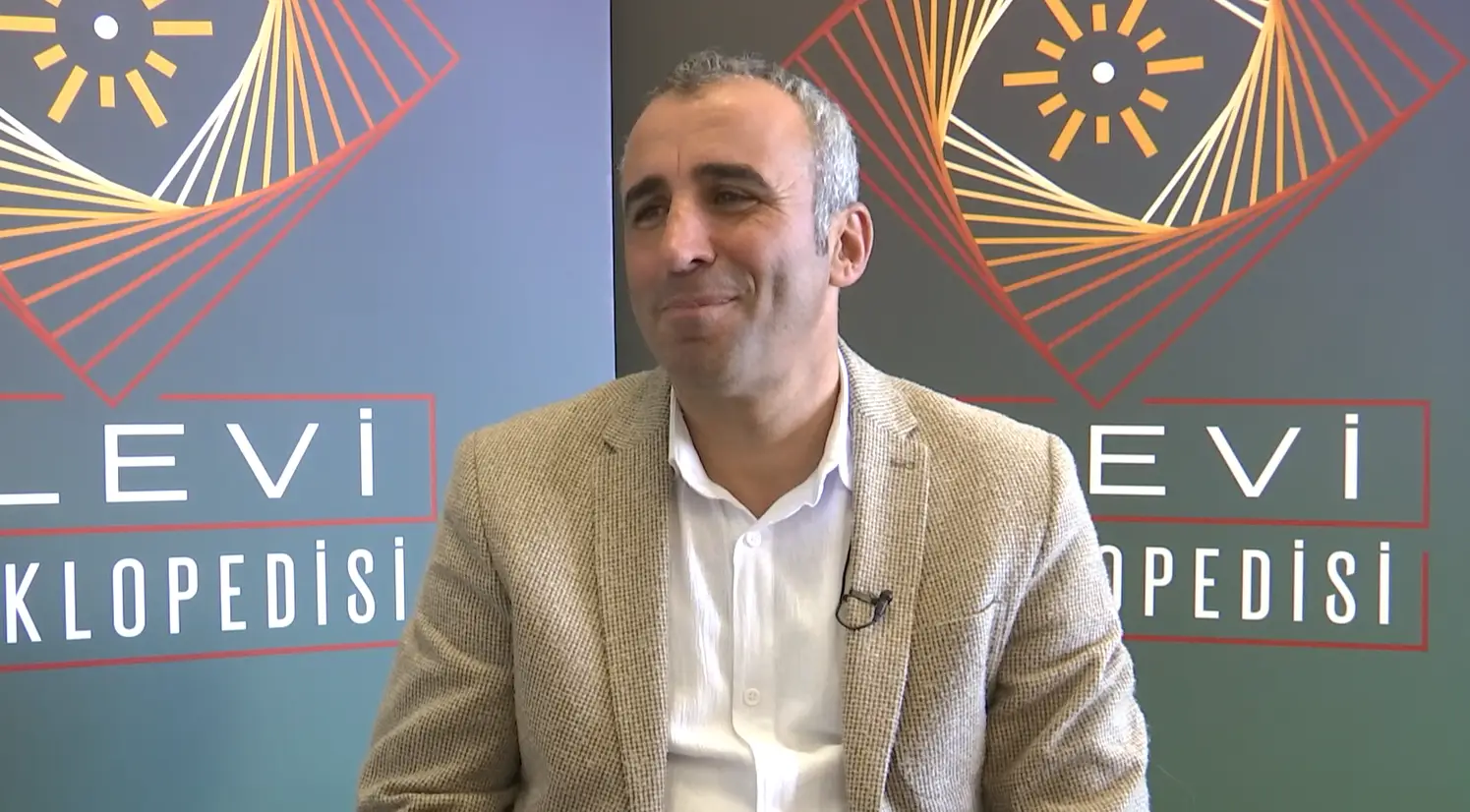
Pir Celal Fırat
Interviewer
- Dr. Ahmet Kerim Gültekin