Roman (Gypsy) Alevis
Who Are the Romans?
Groups of nomadic origin are generally defined through concepts introduced by those who do not belong to them. In Turkey, many groups are labeled as Gypsy or Roman based on their physical appearance, social status, livelihood strategies, and ways of life. On a regional level, terms such as Lom, Dom, Abdal, Poşa, Mıtrıp, and Aşık are used, alongside occupational labels such as blacksmith, sieve-maker, basket-maker, cart-driver, and similar designations. This situation is not unique to Turkey; similar practices are observed in all countries where Roman groups live. For example, in Europe, dozens of different communities such as Sinti, Manush, Cale, Kaale, Romanichals, Travellers, Gens du voyage, and Yenish are grouped under the umbrella term Roma (equivalent to Roman in Turkey) (Marushiakova and Popov 2016, 10-11).
The ethnic origins, native languages, religious beliefs, and cultural characteristics of Roman groups have been the subject of various studies in the countries where they live. These issues, on which no consensus can be reached, re-emerge repeatedly under changing conditions. Within this extensive body of literature, three main approaches stand out.
According to the dominant approach, Romans are of Indian origin and migrated to various regions between the 5th and 15th centuries due to invasions, the collapse of agricultural activity, and famine. Along their migration routes, they encountered dominant languages such as Persian, Armenian, and Greek, which influenced their own languages, said to have split into two branches known as “Ben” and “Phen.” By the late 10th and early 11th centuries, Roman groups had spread across a wide area extending from northern Mesopotamia to the eastern borders of the Byzantine Empire. Following different migration routes, they are said to have divided into three main groups: Dom, Lom, and Rom. Accordingly, Dom groups, speaking the “Ben” language, settled in Syria and Palestine before continuing toward Egypt, North Africa, and Spain. Lom groups, speaking “Phen,” migrated northward and settled mainly in Armenia and Georgia. Rom groups, also speaking “Phen” and considered the largest group, moved westward into Asia Minor, the Byzantine Empire, the Balkans, and beyond (Marushiakova and Popov 2001, 11-13). The Indian origin narrative, which emerged in the eighteenth century and has developed to the present, is primarily based on linguistic evidence, particularly the similarities between Sanskrit and the languages of Dom, Lom, and Rom groups (Matras 2005, 53-68).
Another origin narrative is reflected in the term Gypsy, derived from Egypt. Based on archival references, this narrative offers an alternative explanation of origins. Judith Okely, who criticizes the Indian origin narrative, prefers the term Gypsy instead of Roma. She argues that the literate traditions of dominant societies have contributed to the creation of myths regarding the origins of Gypsies and that, as in other parts of Europe, various origins have been attributed to these groups in the British Isles. Okely further suggests that the linguistic features of these groups may have developed through encounters during trade and pilgrimage (2002, 2-4), and notes that people with similar physical characteristics have long lived in the Mediterranean and Eastern Europe (1997, 18). In Anatolia, the term Kıpti (meaning Egyptian) was widely used alongside Gypsy until the early Republican period (Yılgür 2015, 34-36). In this respect, alongside India, Egypt also emerges as a homeland attributed to nomadic-origin groups in both Europe and Anatolia.
Another scholarly approach critiques naming, origin, and generic classification and instead examines nomadic-origin groups through the concept of peripatetic. This approach does not engage with debates surrounding Gypsy or Roma, but rather analyzes nomadic ways of life shaped around occupational accumulations, group differences, and the exclusionary discourses directed at such groups. The concept of peripatetic is defined by Joseph Berland and Aparna Rao through a set of characteristics. According to them, peripatetic groups have ambiguous identities, meaning they lack clear origin narratives. They are associated with low social status within the surrounding social structure because they engage in occupations avoided by settled populations. Their lifestyles and rituals differ from those of settled communities. When necessary, they engage in code-switching through their own languages or argot. These groups tend to be endogamous and lead mobile lives rather than being tied to a fixed location. Due to the flexibility of their social structures, they quickly adapt their livelihood strategies to changing conditions. When no viable adaptive options remain, they may settle permanently and abandon their nomadic way of life (Berland and Rao 2004, 14-22).
In Turkey, many studies focusing on the concepts of Roman and Gypsy emphasize supposed Indian origins alongside linguistic and cultural features. However, given the long history of mobility among these groups, it is not methodologically sound to make definitive claims about their origins. The ways in which these groups define their identities, the extent to which narratives about their past can be reconstructed within the limits of collective memory, the absence of written sources, and changing socio-economic, social, and cultural conditions all produce significant uncertainties. For this reason, umbrella concepts such as Gypsy or Roman, used together with narratives of common origin, language, belief, and ethnic characteristics, also carry a tendency to obscure group differences.
The term Roman corresponds ethnically to Rom groups, but it is used not only by Rom groups but also by non-Rom groups. Due to the negative connotations associated with the term Gypsy, individuals generally prefer the term Roman in everyday life, as it provides a relatively legitimate and less stigmatized designation. This preference may vary depending on circumstances, and other terms may be adopted in place of Roman.
Abdals constitute one of the most prominent examples of non-Roman groups. Their linguistic repertoires, migration routes, affiliations with Alevi Ocaks, and cultural characteristics differ significantly. As is evident, the differences among nomadic-origin groups are neither simple nor insignificant. It is not possible to adequately understand these groups through outdated or non-scientific references. Therefore, the question “Who are the Romans?” largely corresponds to answers marked by uncertainty and refers to a wide range of nomadic-origin groups.
In this entry of the Alevi Encyclopedia, the term Roman is used as an umbrella concept encompassing nomadic-origin groups such as Rom, Dom, and Lom, which differ in migration routes, linguistic repertoires, and ethno-cultural accumulations.
Alevism and Romans
A review of the literature on Roman groups reveals that research on their religious life remains insufficient. The Roman population living in Turkey is estimated to range between 500,000 and 5 million (Marsh 2008, 21; Adaman, Demir, Uncu, and Yeniev 2022, 5). However, these estimates are marked by considerable uncertainty in many respects. It is not clear which groups are included within this population. Therefore, statements regarding the population largely rely on external observation and generic classification. On the other hand, it is generally stated that the majority of Roman groups are Sunni, while a certain portion adheres to Alevism (Marsh 2008, 22-23). It is also suggested that nomadic Roman communities largely adopt Alevism, whereas settled communities tend to adhere to Sunnism (Özkan 2000, 103-104). According to Hamza Aksüt, “the majority of Gypsies living in Anatolia are Alevi, and it is assumed that those who arrived in Mesopotamia in the 9th and 10th centuries adopted Alevism during this period” (2009, 407).
At the same time, in texts addressing the ethnic origins of Alevis, Roman groups are either not mentioned at all or are only referred to in limited terms. It is emphasized that Alevism does not distinguish between color, language, religion, ethnicity, or gender, and that it has been shaped by the shared values of people from different origins-particularly Turks, Turkmens, Kurds, and Albanians-and diverse cultural backgrounds (Gülçiçek 2004, 26; Yaman 2007, 48-58; Tur 2002, 287-288).
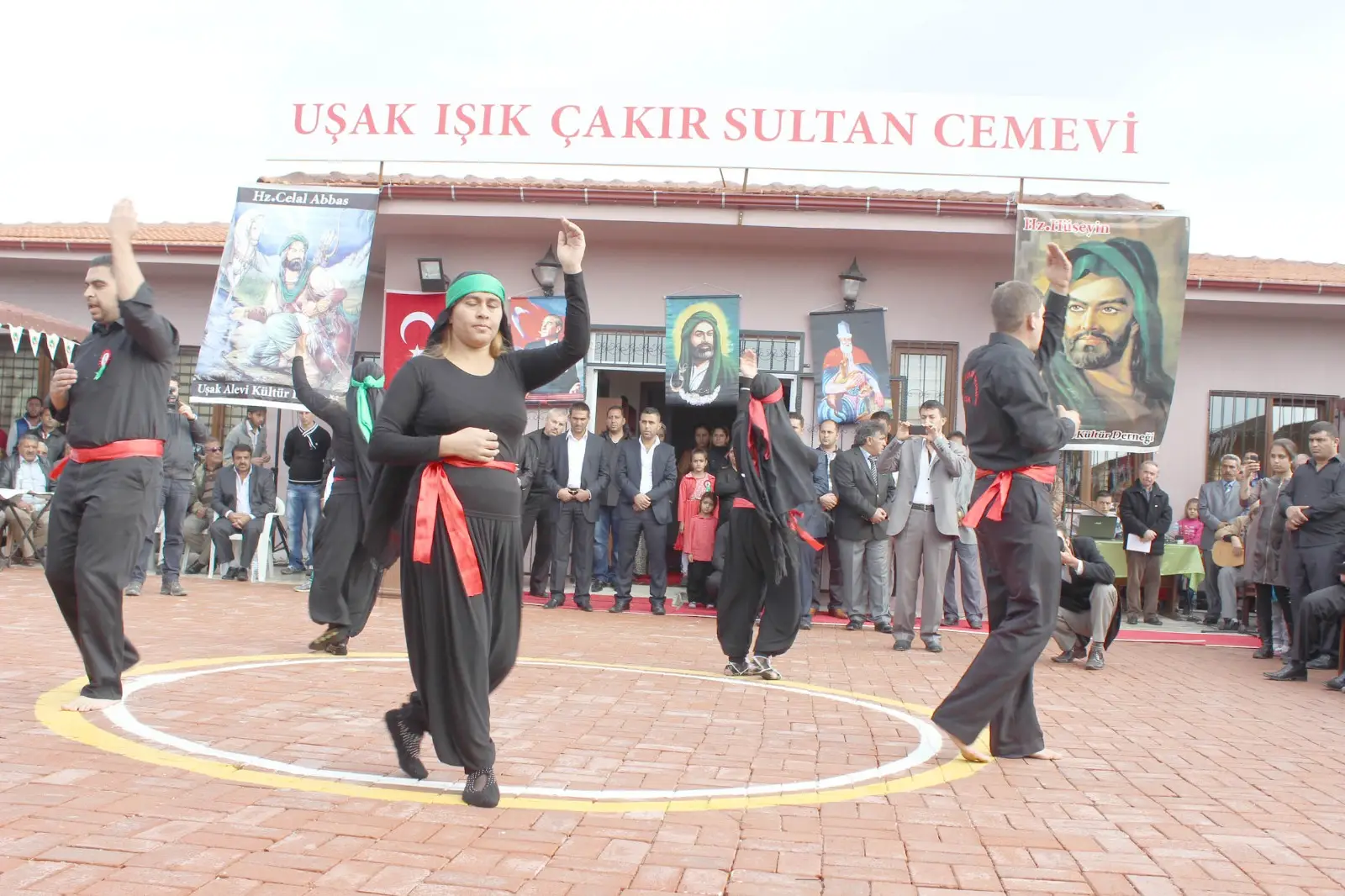
The proportion of Roman groups who adhere to the Alevi faith and the historical period during which they adopted it remain unclear. However, when studies focusing on different provinces and statements by certain Roman associations are taken into account, it becomes evident that Alevism is widespread among Roman groups. In extensive fieldwork conducted in 2023 and 2024 in provinces such as Uşak, Kütahya, Afyon, Manisa, Elazığ, and Malatya, Ozan Doğan (2025) demonstrates that groups stigmatized as Gypsy are not homogeneous. Distinguishing Abdals from the Roman category, Doğan (2025) argues that Alevism is widespread among Roman groups with diverse ethnic characteristics. He supports this argument by pointing to kinship networks that extend across different regions and provinces. Noting that the adoption of Alevism among Roman groups may date back to very early periods, Doğan reports that a significant portion of Roman groups living in the Aegean region (particularly Lom groups and blacksmith communities) have been affiliated with the Işık Çakır Sultan Ocak for at least two centuries. Documenting that different groups adopted Alevism at different historical moments, Doğan (2025, 113-156) also notes that affiliation with the Ocak system is widespread among Roman groups.
Beyond Doğan’s (2025) comprehensive study, the relationship between Roman groups and the Alevi faith is also addressed in various theses, articles, and public statements. These accounts are significant in that they point to different localities and regions. For example, Muhammet Fırat, in his doctoral dissertation on the socio-economic conditions of Roman groups in Malatya, reports that 85% of Roman groups in the region identify themselves as Alevi-Bektashi (Fırat 2016, 159). Similarly, Ensar Çetin, in his study on the Poşa (Lom) community in Çankırı, notes that a portion of the approximately 2,000 Poşa living in the city define their religious identity as Alevi-Bektashi (2015, 95-98).
Former CHP İzmir MP Özcan Purcu argues that approximately 90% (or possibly more) of Roman groups who arrived in Anatolia were Alevi-Bektashi but were gradually assimilated over time. Referring to his field experience, Purcu states that he is familiar with Roman groups living in all provinces of Turkey (Aslan 2022, 54).
Assimilation among Roman Alevis has also been noted by other researchers. Emirhan Demirbozan reports that Roman individuals in the Altıeylül district of Balıkesir who had adopted the Alevi faith have increasingly come under the influence of Sunnism and have gradually distanced themselves from Alevi practices (2020, 92). Similarly, Erdoğan Şener notes that although approximately 3,500 of the roughly 8,000 Roman individuals living in Akhisar are Alevi, only a small segment continues to practice their rituals as before (Halis 2021).
There are no fundamental differences in the belief practices of Roman Alevis; Roman groups have not transferred their ethno-cultural characteristics into their religious practices. However, as the above examples indicate, the ethno-religious structure of the cities in which they live has had a significant influence on Roman Alevis. It can be argued that Roman Alevis have been exposed to assimilation policies to a greater extent than other Alevi groups in different regions. This is largely because Roman Alevis do not maintain systematic relationships with non-Roman Alevis or Alevi institutions in the cities where they live. As a result, Roman groups have transmitted the Alevi faith to the present primarily through their own social networks and through the dedes of the Ocaks to which they are affiliated. In some local contexts, both Alevi and Sunni ritual practices are observed (Doğan 2025, 148-150). This situation, which is not unique to Roman Alevis, has deep historical, social, and sociological roots.
Beyond Turkey, there are also Roman groups adhering to Alevi or Shi’i beliefs in Iran (Amanolahi 1999-2000, 114), Afghanistan (Rao 2004, 278-279), Syria (Meyer 2004, 74), the South Caucasus (Marushiakova and Popov 2016, 88), and Bulgaria (Marsh and Strand 2005, 168-172). It is likely that similar groups exist in other countries as well; however, due to the lack of comprehensive scholarly studies, current knowledge remains limited.
Conclusion
Although Roman Alevis live in all regions of Turkey and constitute a large population, they remain overshadowed by the stigma of “Gypsy.” Their histories, cultures, and accumulated traditions are ignored. In cemevis, shrines, and commemorative ceremonies, the presence of Roman Alevis is often met with distance and exclusion.
Because the term Gypsy carries negative connotations, it is generally not used by Roman groups themselves. Non-Roman individuals tend to evaluate nomadic-origin groups according to their lifestyles, physical appearance, and livelihood strategies. They treat them as if they were a homogeneous group, stigmatize them, and assign them various labels.
In Turkey, the terms Roman or Gypsy at the national level, and terms such as Lom, Dom, Poşa, Mıtrıp, and Aşık at the regional level, are used to describe nomadic-origin groups. These concepts are framed through the assumptions, ideas, and narratives attached to the term Gypsy and thus permeate everyday life. For this reason, Romans are perceived either as pitiable or are coded as dirty, dangerous, ignorant, shameless, or criminal. In every case, however, they are regarded from a position of superiority. Roman groups experience pressure not only from dominant segments of society but also from marginalized groups. Even if they have lived in a city for centuries, they cannot escape being treated as strangers. Yet they are, in fact, among the oldest inhabitants of nearly every environment in which they live.
Roman groups in Turkey do not constitute a homogeneous population. For this reason, it is necessary to proceed with caution when making claims about the origins, beliefs, and ethnic characteristics of Roman groups that have reached the present through different regions, contexts, and centuries.
The expression Roman Alevis is an umbrella concept. Under this umbrella are nomadic-origin Alevi groups who have been denied visibility due to the stigma of “Gypsy” and who display different ethno-cultural characteristics, such as Rom, Dom, Lom, and blacksmith communities. Each of these groups differs in its migration routes, native languages, and modes of adopting and transmitting Alevism across generations. This accumulated heritage constitutes a genuinely neglected and important branch of Anatolian Alevism.
Adaman, Fikret, İsa Ali Demir, Baran Alp Uncu, and Gökçe Yeniev. 2022. Covid-19’un Türkiye’deki Roman Toplulukları Üzerindeki Sosyo-ekonomik Etki Araştırması. İstanbul: Sıfır Ayrımcılık Derneği.
Aksüt, Hamza. 2009. Aleviler: Türkiye-İran-Irak-Suriye-Bulgaristan. Ankara: Yurt Kitap-Yayın.
Amanolahi, Sekandar. 1999-2000. “The Gypsies of Iran (A Brief Introduction).” Iran and the Caucasus 3-4: 109-118.
Aslan, Şükrü, ed. 2022. Mersin Alevi Toplulukları Çalıştayı. Mersin.
Berland, Joseph C., and Aparna Rao. 2004. “Unveiling the Stranger: A New Look at Peripatetic Peoples.” In Customary Strangers: New Perspectives on Peripatetic Peoples in the Middle East, Africa, and Asia, edited by Joseph C. Berland and Aparna Rao, 1-30. London: Praeger.
Çetin, Ersan. 2015. “Çankırı Poşalarında Sosyal ve Dini Hayat.” Atatürk Üniversitesi Sosyal Bilimler Enstitüsü Dergisi 18 (3): 85-102.
Demirbozan, Emirhan. 2020. Roman Vatandaşlarda Dindarlık: Geleneklerde Dışlanmanın İzdüşümleri (Balıkesir/Altıeylül İlçesi Örneği). Yüksek Lisans tezi, Çanakkale On Sekiz Mart Üniversitesi.
Doğan, Ozan. 2025. Roman Aleviler. İstanbul: İletişim Yayınları.
Fırat, Muhammet. 2016. Çingeneliği Anlamanın İmkanları: Çingeneler Üzerine Sosyolojik Bir Araştırma (Malatya Örneği). Doktora tezi, Fırat Üniversitesi.
Grellmann, Heinrich Moritz Gottlieb. 1787. Dissertation on the Gypsies. London.
Gülçiçek, Ali Duran. 2004. Alevilik (Bektaşilik, Kızılbaşlık) ve Onlara Yakın İnançlar. 2 vols. Köln: Ethnographia Anatolica Verlag.
Halis, Müjgan. 2021. “Alevilerin de Ötekileri: Abdallar ve Romanlar.” Accessed November 25, 2025. https://www.independentturkish.com/node/416066/haber/alevilerin-de-%C3%B6tekileri-abdallar-ve-romanlar
Hancock, Ian. 2006. “On Romany Origins and Identity: Questions for Discussion.” In Gypsies and the Problem of Identity: Contextual, Constructed and Contested, edited by Adrian Marsh and Elin Strand, 69-92. İstanbul: Swedish Research Institute in Istanbul.
Kenrick, Donald, and Grattan Puxon. 1972. The Destiny of Europe’s Gypsies. New York: Basic Books.
Marsh, Adrian. 2008. “Etnisite ve Kimlik: Çingenelerin Kökeni.” In Biz Buradayız! Türkiye’de Romanlar, Ayrımcı Uygulamalar ve Hak Mücadelesi, edited by Ebru Uzpeder, Savelina Danova/Roussinova, Sevgi Özçelik, and Sinan Gökçen, 19-28. İstanbul.
Marsh, Adrian, and Elin Strand. 2005. “Gypsies and Alevis: The Impossibility of Abdallar Identity.” In Alevis and Alevism: Transformed Identities, edited by Hege Irene Markussen, 162-174. İstanbul: Isis Press.
Marushiakova, Elena, and Vesselin Popov. 2001. Gypsies in the Ottoman Empire. Hatfield: University of Hertfordshire Press.
Marushiakova, Elena, and Vesselin Popov. 2011. “Between Exoticization and Marginalization: Current Problems of Gypsy Studies.” Behemoth 1: 51-68.
Marushiakova, Elena, and Vesselin Popov. 2016. “Introduction: Who Are Roma?” In Roma Culture: Myths and Realities, vol. 3, edited by Elena Marushiakova and Vesselin Popov, 7-34. Munich: Lincom Academic Publishers.
Matras, Yaron. 2005. “The Role of Language in Mystifying and Demystifying Gypsy Identity.” In The Role of the Romanies, edited by Nicholas Saul and Susan Tebbutt, 53-78. Liverpool: University of Liverpool Press.
Meyer, Frank. 2004. “Biography and Identity in Damascus: A Syrian Nawar Chief.” In Customary Strangers: New Perspectives on Peripatetic Peoples in the Middle East, Africa, and Asia, edited by Joseph C. Berland and Aparna Rao, 71-93. London: Praeger.
Okely, Judith. 1997. “Some Political Consequences of Theories of Gypsy Ethnicity: The Place of the Intellectual.” In After Writing Culture: Epistemology and Praxis in Contemporary Anthropology, edited by Andrew Dawson, Jenny Hockey, and Allison James. London: Routledge.
Okely, Judith. 2002. The Traveller-Gypsies. Cambridge: Cambridge University Press.
Özkan, Ali Rafet. 2000. Türkiye Çingeneleri. Ankara: Kültür Bakanlığı Yayınları.
Rao, Aparna. 2004. “Stranger and Liminal Beings: Some Thoughts on Peripatetics, Insiders, and Outsiders in Southwest Asia.” In Customary Strangers: New Perspectives on Peripatetic Peoples in the Middle East, Africa, and Asia, edited by Joseph C. Berland and Aparna Rao, 269-299. London: Praeger.
Tur, Seyit Derviş. 2002. Erkanname: Aleviliğin İslam’da Yeri ve Alevi Erkanları. İstanbul: Can Yayınları.
Yaman, Ali. 2007. Alevilik ve Kızılbaşlık Tarihi. İstanbul: Nokta Kitap.
Yılgür, Egemen. 2015. “Tek Parti Döneminde ‘Kıpti’ Nüfusun İskanı ve Vatandaşlığa Kabulü Üzerine Genel Bir Değerlendirme.” Mimar Sinan Güzel Sanatlar Üniversitesi Sosyal Bilimler Dergisi 12: 32-45.
License information
© The Author(s). Unless otherwise stated, entries published in the Alevi Encyclopedia are licensed under a Creative Commons Attribution 4.0 International License.