III. Alevi Encyclopedia Symposium: A Year of Activities and the Next Phase (9–11 October 2026, Dortmund)
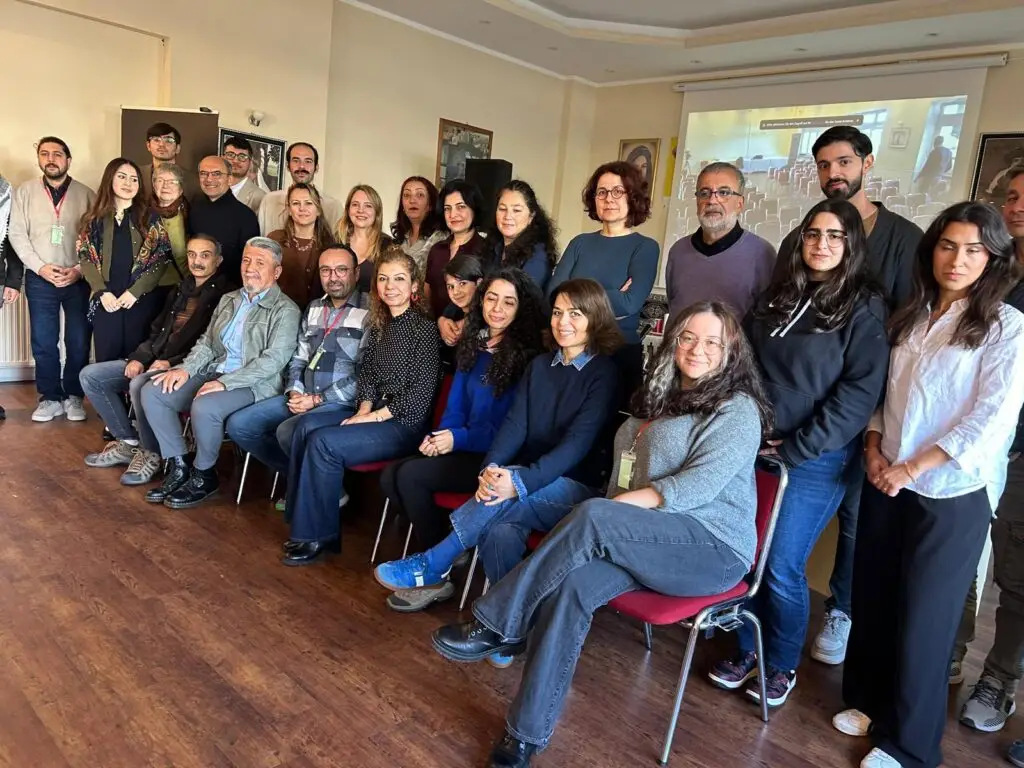
The III. Alevi Encyclopedia Symposium and Workshops took place in Dortmund on 9–11 October 2026, hosted by the DAKME Alevi Cultural Centre. Bringing together academics, researchers, religious leaders and representatives of Alevi organisations from Turkey, Germany, France, the United Kingdom, Austria and Italy, the meeting reviewed the Encyclopedia’s activities during its first year of publication and considered future directions in publishing, the documentation of oral cultural heritage and academic collaboration. The presentations on the first day were followed by separate closed sessions in which the working groups discussed the knowledge and experience accumulated in their respective fields, their needs and their work for the next phase.
Alongside the working group sessions, this year’s symposium programme included presentations on university research, archiving and teaching initiatives, as well as a book presentation. The introduction to the Institute of Alevi Theology at the University of Hamburg and the participation of the Alevi archive team at Leipzig University provided opportunities to share work undertaken at different institutions. Dr Ümit Çetin, one of the organisers of the Biennial International Conferences on Alevism Studies at the University of Westminster, joined online. Together with Dr Zeynep Oktay’s book presentation, these contributions brought recent publications, research opportunities and institutional initiatives in Alevi Studies into the symposium’s discussions.
Launched on 2 July 2025 with its first entries and video recordings, the Alevi Encyclopedia reached a broad readership and viewing audience through its Turkish, English and German content over more than a year of publication. During this period, 125 entries were published with contributions from approximately 80 authors, and around 150 recordings were made accessible in the video archive. More than 3.3 million page views and over 700,000 unique visitors recorded between July 2025 and July 2026 provided a concrete indication of the need for open-access, multilingual sources of knowledge about Alevism. With contributions from over a hundred researchers from different countries and disciplines through its boards and working groups, the Encyclopedia developed as a publishing and archiving initiative sustained jointly by voluntary academic work and community participation.
One of the principal achievements of this period was the establishment of the Encyclopedia’s institutional and bibliographic infrastructure. In February 2026, the institution was registered in the international identification system under the code DE-4607, assigned by the German ISIL Agency. The ISSN 3055-9928, obtained in July 2026, enabled the Encyclopedia to be identified as a continuing publication in international bibliographic systems. In September 2026, Crossref membership was completed through DAKME Alevitisches Kulturzentrum e.V., and the DOI prefix 10.68413 was obtained. This established the infrastructure needed to assign persistent digital identifiers to Encyclopedia entries and share publication metadata with international academic citation systems. These complementary steps strengthened the Encyclopedia’s institutional identity, the traceability of its publications and their usability as academic sources.
During this period, the Alevi Encyclopedia developed its combined functions as a digital museum, an archive of oral cultural heritage, an archive of scholarly expertise and an open-access online academic serial publication. Referenced encyclopedia entries, accounts by religious leaders and educational video content made different forms of knowledge accessible on the same platform. This work is grounded in an approach that creates space for Alevi communities to express their own concepts, histories, religious experiences and memories. Addressing different süreks, languages and regional traditions within their own contexts is a defining element of the Encyclopedia’s publishing approach.
The work undertaken with pirs and anas constituted the principal practical expression of this approach. In the “In the Words of the Leaders of the Yol” video archive, ethnographic interviews documented the ritual knowledge, narratives, concepts and life experiences carried by pirs, anas, dedes, babas and seyits. These recordings, which allow religious leaders to speak in their own languages and through their own concepts, document the transmission of oral tradition across generations and geographical settings. They also make it possible to follow the transformations that Alevism is undergoing today. By bringing life histories, religious knowledge and social memory together, the archive provides a distinctive resource for both Alevi communities and researchers.
The Pirs and Anas Workshops sustained this work by bringing religious leaders and researchers together directly. The II. Pirs and Anas Workshop, held in Dersim on 5–6 September 2026, focused on living religious knowledge, oral memory and their transmission to future generations. By enabling religious leaders to participate directly in the Encyclopedia’s knowledge production, these gatherings contributed to the collaborative development of the archive’s scope and working methods.
International academic relationships also expanded throughout the year. Alevi Studies undertaken around the University of Westminster, the Alevi archive work at Leipzig University and the relationships developed with the Institute of Alevi Theology at the University of Hamburg created opportunities for collaboration in research, publishing and archiving. Cooperation initiated with the Austrian Academy of Sciences’ Commission for Vanishing Languages and Cultural Heritage on cultural heritage, oral memory and linguistic diversity also formed part of this process. The Encyclopedia was introduced to different academic audiences at the Kurdish Studies Conference at the London School of Economics on 29 April–1 May 2026, the I. International Congress of Alevi Studies in Çorum on 5–7 June 2026, and the Knowledge in Transition online lecture series organised within Alevi Theology at the University of Hamburg on 7 July 2026.
Another step towards making scholarly knowledge accessible for educational purposes was the Alevi Encyclopedia Open Lectures series. Eleven lectures addressing key concepts and current debates in Alevi Studies were filmed in Berlin on 11 and 18 July 2026. The series, which began publication on 21 October 2026, was prepared as a multilingual video lecture resource for students, researchers, educators and others interested in the subject.
Day One: Reflections on the Encyclopedia’s First Year
The programme on Friday, 9 October, opened with a gülbenk by Pir Cemal Cenan and Didar Cenan Ana. A welcome by DAKME Co-Chair Alişan Tekin was followed by a video message from Ina Brandes, Minister of Culture and Science of North Rhine-Westphalia, and an address by the Deputy Mayor of Dortmund. Speaking on behalf of Rıza Şehri Akademisi, Demir Çelik reflected on the role of scholarly work in the transmission of faith and culture. In the first session, academics representing the Editorial Board for the 2022–2026 publication period discussed the Encyclopedia’s first year and its overall editorial approach:
Dr Hayal Hanoğlu outlined the Encyclopedia’s establishment and development. She emphasised the importance of participatory working practices, multilingualism and open access for the transmission of cultural heritage, and reiterated the aim of publishing in Kurmancî and Kırmanckî/Zazaki. Drawing attention to the Encyclopedia’s reception within society, she noted that its entries were being used in university courses and educational activities in cemevis, while its entries and pir/ana videos were being cited in peer-reviewed academic journals. She described these developments as indications that the public benefit envisaged at the Encyclopedia’s foundation was beginning to take concrete form.
Dr Ahmet Kerim Gültekin reviewed the Encyclopedia’s first-year data on publications, archival materials and audience reach. He explained the importance of the ISIL, ISSN and DOI infrastructure for institutional continuity and the use of the Encyclopedia as an academic source. He considered its combined functions as a digital museum, an archive of oral cultural heritage, an archive of expertise and an open-access academic publication. He identified expanding the coverage of entries, increasing multilingual publications, maintaining academic collaborations and ensuring the continuity of existing work as priorities for the next phase.
Dr İhsan Koluaçık introduced the life histories and interview recordings in the Pirs and Anas section. He highlighted the role of oral history in preserving collective memory and transmitting it to younger generations.
Dr Sönmez Alvanoğlu Yolcu drew attention to the importance of representing the historical, cultural and religious diversity of Alevi communities through an inclusive and pluralistic approach in the Encyclopedia. She emphasised that the diversity of Alevism could not be explained through a single interpretation.
Ece Esmer Kırma (PhD candidate) focused on questions of who transmits knowledge, through which concepts and by what means. Treating archiving as an ethical responsibility, she stressed the importance of avoiding hierarchies between different forms of knowledge.
CanoCan Films producer Ekin Can Erol drew on his documentary experience to discuss the need for accessible German-language resources among young people growing up in Germany. He stated that his visual work aimed to contribute to meeting this need.
Day Two: Working Group Sessions
(1) Alevi Media and Art: The Representation of Alevism in Media and Art Working Group
Participants: Associate Professor Dr İhsan Koluaçık and producer Ekin Can Erol.
The Alevi Media Studies Group reviewed the current state of research on Alevism and media, gaps in the Encyclopedia’s coverage of this field and proposals for the next phase. Participants stressed the need to expand work currently undertaken by a two-person team, noting that the existing number of entries did not adequately reflect the diversity of Alevi media history and contemporary production. They observed that this could not be explained solely by the number of researchers working in the field. A wider academic and professional network needed to be reached, potential contributors encouraged and the preparation of entries made easier. The group’s scope was considered within a framework extending from magazines and newspapers to radio and television, from online journalism to social media, and from cinema and documentary to theatre, painting and photography. The importance of these fields for Alevis’ public visibility, forms of representation and cultural memory was emphasised. To develop the Encyclopedia’s content, participants proposed preparing both general entries on these fields and entries focused on particular publications, works, individuals and media organisations. Producing at least twenty new entries, beginning with television channels, programmes and broadcasting experiences before extending the work to other media and arts, was considered an achievable initial target. Participants noted that entries could also take the form of short, clear, verifiable and referenced texts, and that a sample writing template could facilitate contributions. They proposed documenting publishing and broadcasting practices and institutional histories through the participation of journalists, directors, programme producers, artists and archivists alongside academics. Work on pirs and anas was also on the group’s agenda. Participants stressed that, alongside conducting new interviews, existing recordings needed to be described, classified and contextualised to make them suitable for research. In this context, the possible transfer of the TV10 archive to DAKME was discussed as an issue requiring further investigation that could contribute to preserving Alevi media memory. Following a proposal from Dersim, the designations yol önderleri, Ocak evlatları, Ocakzadeler, yol evlatları and yol rehberleri were also discussed. Participants recommended that these terms should not simply be treated as synonyms, but examined in relation to the communities in which they are used, their historical contexts and their religious functions. Increasing entry production, broadening the network of authors and making use of audiovisual archives emerged as complementary priorities for the next phase.
(2) Alevi Music and Deyişs Working Group
Participants: Dr Zeynep Oktay and PhD candidate Hasret Tıraz. Group member Erkan Çanakçı was unable to attend.
Working under the heading “Alevi-Bektashi Literature and Music”, the group focused on entry topics and potential authors to expand the Encyclopedia’s coverage of this field. It prepared a working list comprising 25 topics to be proposed to specific researchers, 15 topics for which authors had not yet been identified and 12 topics that could fall within the remit of a separate faith and irfan group. Literary genres, musical and ritual practices, written sources, âşıks and historical figures formed the principal subjects of this list. Alongside genres such as deyiş, düvazdeh-i imam, Bektashi anecdotes and menakıpname, entries were proposed on Pir Sultan Abdal, Nesimi Çimen, Mahzuni Şerif, Harabi and Sadık Abdal. Separate entries on women âşıks, Rumelian âşıks and contemporary âşıks were also envisaged. To address the linguistic and regional diversity of Alevi-Bektashi literature and music, the list included Tahtacı music, Kurdish- and Zazaki-language Alevi music, multilingual deyişs, and Albanian- and Greek-language deyişs. Preparing the “Deyiş” entry in German was also among the planned contributions. The relationship between written sources and performance, poetry collections and cönks, Buyruk and the Rum Abdalları were identified as further topics requiring attention. To examine the historical and political conditions of music, entries were proposed on Republican-era music policies, the collection of Alevi music and censorship, and the political and cultural dimensions of semah. Representations of Alevism and Bektashism in Republican-era and contemporary literature were also included in the group’s scope. The need to identify authors for topics such as şathiye, devriye, terceman, gülbang, miraçlama and mersiye was recorded. Participants also proposed addressing musical instrumentation and sonic characteristics through subcategories where necessary. The group further raised the possibility of establishing an “Alevi Faith and İrfan” working group, with its name to be finalised later. Suggested topics for this group included kesret and vahdet, Ali, the Twelve Imams, mürşit and pir, Pençe-i Âl-i Abâ, sır, irfan and marifet, the Fourteen Pure Innocents, the Seventeen Kemerbest, kâmil insan and âşık, alongside objects used in Bektashism, such as the teber and keşkül.
(3) Alevi Politics and Institutions Working Group
Participants: Associate Professor Dr Berna Zengin Arslan, Dr Deniz Coşan Eke, and Associate Professor Dr Mehmet Ertan and Associate Professor Dr Cemal Salman joining online; Professor Dr Bülent Bilmez also participated in the first session.
The group discussed the concepts and historical experiences through which Alevi politics and institutionalisation could be examined, and reviewed the Encyclopedia’s publication priorities in this field. Participants noted that restricting politics to relations with the state, political parties and formal mechanisms of representation would be insufficient to explain Alevis’ political experiences. They proposed also considering solidarity networks, religious institutions, struggles for rights, deyişs, rituals and collective emotions as practices that produce political meanings and relationships. Similarly, they emphasised that institutionalisation should not be defined solely through associations, foundations, federations and other formal organisations. Drawing on criteria such as continuity, legitimacy, representation, knowledge and the production of authority, they proposed examining the Ocak system and relations of dedelik, pirlik, analık, taliplik and musahiplik within their own historical and social contexts. These institutions should not be treated as deficient or incomplete versions of modern organisations. Within this framework, 30 priority entries were proposed across six thematic areas: politics and historical experiences; the transformation of traditional institutions; the modern Alevi movement; law and equal citizenship; gender and generations; and transnational organisation, education and digitalisation. The proposals included party-political experiences, cemevis, compulsory religious education, national and international legal cases, women’s and youth organisations, the politics of emotion, Aleviphobia and forms of authority developing in digital environments. Participants stressed that gender should not be confined to women’s position, and that relations of representation and inequality should be addressed alongside feminist approaches and discussions of masculinity and patriarchy. The list was understood as provisional and open to expansion through separate entries on historical events and political figures. A pool of authors was also established, matching potential contributors with relevant areas. The group additionally developed criticisms and proposals concerning the Encyclopedia’s existing content and editorial procedures. Participants observed that some narrowly defined subjects received detailed treatment while foundational topics could remain more general. They proposed developing shared criteria for entry scope, length, subheadings and relationships between entries. They emphasised that general concepts included in the Encyclopedia should be explicitly connected to Alevi history, social experience, memory or struggles for rights. To address the possibility of entry production becoming concentrated among particular authors and approaches, they recommended monitoring the distribution of authorship and increasing diversity in terms of discipline, gender, generation, geography and institutional affiliation. Recognising the Encyclopedia itself as a form of institutionalisation that confers legitimacy and visibility on knowledge, the group proposed discussing its processes of knowledge production and representation at an open online meeting. It was agreed that Berna Zengin Arslan and Deniz Coşan Eke would alternate as group representatives.
(4) Alevi Communities and Ocaks Working Group
Participants: Professor Dr Markus Dressler, Dr Hayal Hanoğlu, Dr Sönmez Alvanoğlu Yolcu, doctoral researchers Ufuk Ali Kaftanlı and Samet Acar, and two university students studying in Germany.
The group reviewed the representation of different Alevi communities in the Encyclopedia, gaps in existing content and opportunities for new authors to contribute. With Dr Volkan Ertit unable to attend, Dr Sönmez Alvanoğlu Yolcu represented the Arab Alevism Working Group. Her contribution to the first part of the meeting addressed the historical, religious and cultural characteristics of Arab Alevis and their differences from other Alevi communities. Participants drew attention to gaps in the literature and the need to develop content on Arab Alevism. They proposed continuing the work on the basis of the topics and potential authors identified in the previous year’s report. The discussion then turned to Tahtacı communities, with contributions from Ufuk Ali Kaftanlı and Samet Acar, whose doctoral research focuses on Tahtacı Alevis. The absence of entries directly devoted to Tahtacı Alevi communities was considered a significant gap. A list of proposed entries was drawn up under the headings of history, identity and communities; religious practices and rituals; and material culture and social life. The first heading covered the historical origins of the Tahtacı, tribal names and affiliations, the Neccarlı, Çaylak and Enseli tribes, local communities and methodological problems in researching Tahtacı history. In relation to ritual life, entries were proposed on funerary practices and nefess, Hıdrellez, children’s and boys’ ikrar, hayır meals, kırklama and duşak kesme, asker lokması, weddings, özbirleme, yatırs and religious practices performed on particular days. Under material culture and social life, discussion addressed the three-panel garment known as deyre, the etymological origins of the terms used and gender relations. Adapting existing academic research to the Encyclopedia’s format was adopted as a concrete way to address these gaps. The possibility of Ufuk Ali Kaftanlı preparing an entry based on his article examining an Orientalist source on Kızılbaş-Alevi Turkmen in nineteenth-century western Anatolia was discussed. Samet Acar stated that he could produce an entry from his research on the relationships between forestry activities, the environment, faith and rituals among Tahtacı communities in the Kaz Mountains, and the transformation of these relationships. Preparing content on Tahtacı Alevis and contacting potential authors, alongside continuing the work on Arab Alevism begun the previous year, particularly by maintaining contact with academics unable to attend the symposium, became the group’s principal directions for the next phase.
(5) History of Alevism and Bektashism Working Group
Participants: Professor Dr Cem Kara, Dr Zeynep Türkyılmaz, Anke Otter-Beaujean (MA), Dr Yeliz Teber, Dr Benjamin Weineck and PhD candidate Eren Alagöz.
The group identified gaps in the coverage of Alevi and Bektashi history and developed entry proposals on the use of sources, historiography, historical figures and regional communities. The use of Alevi and Ottoman sources, the relationships between Buyruk texts and oral and written transmission, and modern Alevi historiography emerged as methodological priorities. In this context, contributions were considered from Cem Kara on Alevi sources, Benjamin Weineck on Ottoman sources and Anke Otter-Beaujean on Buyruk and the relationship between oral and written culture. Historical topics requiring attention included 1826 and 1925, the Abdülhamid period, massacres in the sixteenth and eighteenth centuries, Kızılbaş affiliations in the Ottoman Empire and relations between the Diyanet and Alevis. Entries were proposed on the Çelebis and Çelebilik in the modern period, the Babagân tradition, Ocak–talip relations and intermediary Ocaks, dergâhs and Ocaks affiliated with Kızıl Deli, and dervish groups such as the Abdal and Kalenderi. The list’s geographical scope included Alevi-Bektashi communities in the Balkans, Albania, Bulgaria and Western Thrace, Bektashism in the West and processes of institutionalisation developing through migration to Europe. Participants identified a need for entries on historical figures such as Shah Ismail, Pir Sultan, Kul Himmet, Fuzuli and Otman Baba, alongside the Babai Revolt, Hakikatçilik and the Vilayetname. Proposals on women’s history in Alevism and on Kadıncık Ana, Elif Ana, Zöhre Ana and Didar Ana were also included in the working list. Art history and visual representations of Ali were identified as further areas of research to be considered alongside written sources. Some topics were matched with potential authors, while others remained open for authors to be identified later. To improve the use of the Encyclopedia and understanding of its content, participants proposed including recommendations for further reading and bibliographic resources, and explaining the historical and social contexts of material on leaders of the yol. They also questioned the designation “Bektashi Studies” for the group, raising the issue of whether its name adequately reflected a scope that also encompasses Alevi history and sources.
(6) Dersim Alevism Working Group
Participants: Dr Aynur Ünal, Ece Esmer Kırma (PhD candidate), Dr Ahmet Kerim Gültekin, Songül Murat (MA), Melinda Yaman (MA), Babek Çataltepe (BA), Yusuf Terkivatan (BA), representatives of BDAJ – Bund der Alevitischen Jugendlichen in Deutschland (Union of Alevi Youth in Germany), and six participants studying at various universities in Germany. Professor Dr Bülent Bilmez also participated in the second session.
Established the previous year, the Dersim Alevism Studies Group expanded through new participants and reviewed the accumulated research in the field and the Encyclopedia’s needs for the next phase. Participants from Kurdish student organising in Germany brought diaspora experiences into the discussion. A contribution from a Yaresan participant from Rojhelat made it possible to consider the relationships between Rêya Heq and religious traditions with which it shares a historical and cultural environment. The morning session focused on the development of academic and intellectual work on Dersim Alevism from the past to the present, and considered the field’s place within Alevi Studies. Reviewing the Encyclopedia’s existing content, participants noted that a body of material had developed around conceptual topics such as zâhir and bâtın, cem, dâr, the four elements and the Güruh-u Naci creation narrative; social relations such as kirvelik, analık and musahiplik; elements of sacred geography such as jiar û diyar, Munzur, sacred mountains and trees; and subjects relating to the religious calendar, including Gağan, the Xızır fast and Kara Çarşamba. Content on Dersim 1937–38, the intergenerational transmission of trauma, the Seyit Rıza monument and memory was also included in this assessment. By contrast, participants noted the absence of entries on figures who hold an important place within the tradition, such as Elif Ana, Pir Sultan Abdal, Hacı Bektaş Veli and Nesimi. They proposed examining Rêya Heq through a material religion approach focused on objects and everyday practices, and suggested entries on teberik, traditions relating to salt and tarık. These proposals were developed further in the afternoon session, when Dersim folklore and mythology, Rêya Heq cosmology and Şahmaran narratives were added to the working list. Participants particularly noted the absence of a written entry on qurban, despite the presence of four or five videos on the platform, and the need for content on forms of semah specific to Dersim, their associated deyişs and kilamên Heqîye. The functions historically performed by certain Ocaks in treating illness and providing healing were identified as an area requiring research into the relationships between religious authority, social care and organisation. Entries were proposed that would directly address Rêya Heq’s relationships with traditions such as Ahl-e Haqq, Yezidism and the Druze tradition, as well as with neighbouring Sunni Kurdish and Sunni Turkish communities. Within multilingual publishing, participants emphasised the need to translate the website and entries into Kurmancî and Kırmanckî. Efforts to reach volunteer translators were expected to continue while funding for professional translation was sought. Concerns that the use of artificial intelligence was apparent in some existing entries and citations were also recorded for editorial consideration. Although no definitive proposal was developed on this issue, participants noted that clearer principles concerning the use of artificial intelligence could be discussed in the next phase. Melinda Yaman was elected as group representative. Communication and follow-up were planned to continue through the WhatsApp group, which had been expanded to include new members.
(7) Diaspora and Migration Working Group
Participants: Dr Besim Can Zırh, Tijen Özkaya (PhD candidate), Dr Handan Aksünger-Kızıl, Ozan Dilekli (PhD candidate) and Dr Halil Can.
During the morning session, the group considered Alevis’ transnational migration experiences and processes of diaspora formation within the social and political conditions of different periods. Discussion focused on labour migration and family reunification from the 1960s onwards, refugee and political migration after 1980, and new migration movements since the 2000s, including those involving academics. The formation of associations and cemevis in the diaspora, classes on Alevism, cemeteries, the institutionalisation of Alevi Studies at universities, media and publishing, digital memory and archival work, and sacred places and monuments were considered as different dimensions of organisation and recognition. Participants drew attention to the limitations of approaches centred on Turkey, Germany and Europe, and proposed developing a broader transnational and global perspective. Male dominance and hierarchical relations within Alevi organisations were discussed critically, and the need to strengthen equality, democratic participation and the principles of rızalık in institutional practices was emphasised. Participants also considered the predominant orientation of cemevi activities towards funeral services. They proposed developing social, cultural and educational activities, alongside opportunities for support and solidarity, for children, young people, women, older people and families. Building on these discussions, the afternoon session developed entry topics on the migration history of Alevis in the diaspora, country-specific processes of organisation and recognition, intergenerational relations and transmission, ageing, education on Alevism, theology and Alevi Studies. Further proposals concerned internal and external definitions of identity and belonging, forms of belonging established through yol and lineage, Ocak–talip relations, pirlik and analık, tribal ties, marriage, musahiplik, kirvelik and milk kinship. Rızalık and justice, anti-Alevi discrimination and racism, radicalisation, and relations of class, capital and inequality within the community and wider society were recorded as further research topics. Participants proposed preparing entries that explain what recognition means in different countries and connect this to classes on Alevism and institutional structures at universities. An interview with İsmail Kaplan, one of the actors in this process, was also suggested. Further proposals included preparing an overview of the establishment and current position of Alevi Studies institutions in Europe, documenting particular cemevis through institutional histories and profiles, and examining cemevis as migrants’ social institutions. Discussions concerning younger generations stressed the need to investigate the experiences of children brought to Europe following Maraş 1978 and 12 September 1980, discrimination encountered in educational settings and the involvement of some young people in motorcycle gangs in relation to the conditions of migration. Evaluating institutional projects for young people, documenting sacred places in the diaspora and examining the Alevi cemetery in Berlin in connection with processes of recognition were also among the proposals. Finally, participants raised the possibility of preparing a special issue of the Journal of Alevi Studies to develop discussions of methods and methodology in Alevi research.
Day Three: Working Group Reports, General Discussion and the New Editorial Board
The reports prepared by the working groups were presented at the joint session on Sunday, 11 October. The groups shared their assessments of their respective fields, identified gaps in content, proposed entries and authors, and priorities for the next phase. In the general discussion following the presentations, their proposals and criticisms were considered together in a review of the Encyclopedia’s publication policy, scope and editorial procedures.
The discussions focused on addressing gaps in foundational concepts and topics, representing different Alevi communities and geographical settings, broadening the network of authors and achieving balance in scope and content across entries. Other subjects included presenting oral history and audiovisual recordings with their contexts, developing multilingual publications, and editorial principles concerning the use of sources and artificial intelligence. The lists and reports prepared by the working groups were brought together for consideration in publication planning for the next phase.
The Editorial Board for the 2026–2027 publication period was also established at the meeting. The new structure comprised a permanent Board of Editors and rotating representatives of the working groups. The permanent members of the Board of Editors were Dr Ahmet Kerim Gültekin, Dr Hayal Hanoğlu, Associate Professor Dr İhsan Koluaçık, Dr Samuel Vock-Varley, Ece Esmer Kırma, Dr Sönmez Alvanoğlu Yolcu and Dr Aynur Ünal. Through the rotating participation of researchers representing the other working groups, the arrangement aimed to maintain the contribution of different areas of expertise to publication planning and editorial assessment.
This arrangement sought to ensure the continuity of editorial work and strengthen the relationship between the working groups and the Editorial Board. The assessments, content proposals and criticisms put forward throughout the symposium provided a basis for developing the Encyclopedia’s existing body of work and undertaking the next phase through shared responsibility.
Editorial Board for 2026–2027 (Permanent Members and Working Group Representatives)
- Dr Ahmet Kerim Gültekin (Germany)
- Dr Hayal Hanoğlu (Germany)
- Associate Professor Dr İhsan Koluaçık (Turkey)
- Dr Samuel Vock-Varley (France)
- Ece Esmer Kırma (PhD candidate) (Germany)
- Dr Sönmez Alvanoğlu Yolcu (Turkey)
- Dr Aynur Ünal (United Kingdom)
- Dr Yeliz Teber (United Kingdom) and Dr Zeynep Türkyılmaz (Germany) (History of Alevism and Bektashism Working Group)
- Hasret Tıraz (PhD candidate) (Germany) and Erkan Çanakçı (Turkey) (Alevi Music and Deyişs Working Group)
- Dr Deniz Coşan Eke (Austria) and Associate Professor Dr Berna Zengin Arslan (Turkey) (Alevi Politics and Institutions Working Group)
- Dr Halil Can (Germany) and Dr Besim Can Zırh (Turkey) (Diaspora and Migration Working Group)
- Melinda Yaman (United Kingdom) (Dersim Alevism Working Group)
- Dr Ozan Doğan (Alevi Communities and Ocaks Working Group)