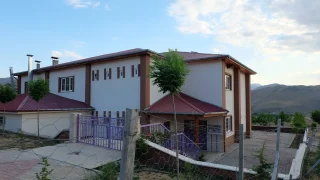
Village Cemevis and Transnational Alevi Placemaking
This entry traces the emergence and significance of rural cemevis built by migrants, situating them within broader debates on migration, religious change, and spatial politics....
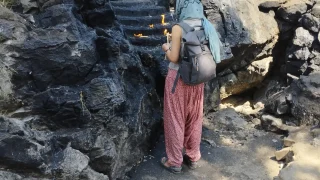
Environmental Ethics in Alevism: the Case of Dersim
Environmental ethics in Alevism reflect a relational worldview in which connections to land, nature, and non-human life are shaped through oral tradition, ritual practice, and...
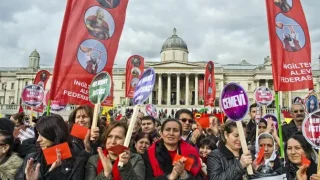
Transnational Alevism
Transnational Alevism refers to the evolving religious, cultural, and institutional formations of Alevism that have emerged in response to migration, displacement, and diasporic conditions. Rooted...
No blog posts found for this author.

Dr. Hayal Hanoğlu
I am a scholar of migration and religion with an interdisciplinary background in social anthropology, sociology, and psychosocial studies. I received my master's degree from Birkbeck, University of London, where I examined the formation of genocide consciousness through the collective memory of people from Dersim, primarily in the diaspora. I completed my PhD in Migration Studies at the University of Kent, where my doctoral research examined the diasporic transformation of Alevism and its impact on rural Alevi geographies in southeastern Turkey.
I subsequently worked as a postdoctoral researcher at the Centre for Advanced Studies of Population and Religion (CASPAR) at the Cracow University of Economics as part of the international and interdisciplinary research project (ALCITfem) on Kurdish women's activism. My research focused on the intersections of religion, ethnicity, gender, and activism, with particular attention to the experiences, narratives, and strategies of Kurdish Alevi women.
Across my academic journey, I have conducted extensive ethnographic fieldwork in both local and transnational settings across Turkey and Europe, including, but not limited to, London, Stockholm, Istanbul, Maraş, Dersim, and Bolu.
While my earlier research examined the contemporary transformation of Alevi communities, my current work extends these questions into ethnohistory, bringing ethnographic and historical methods into dialogue to examine the historical trajectories of Alevi communities. As part of the long-term project ‘Alevi Archive: Ethnohistory of Alevi Communities in Anatolia, 16th to 20th Centuries’, I contribute to connecting archival sources with oral traditions to better understand the historical development of Alevi social and religious life.
I have published widely on migrant and diasporic Alevism, Alevi spatial politics, transnational Alevism, and the intersectional experiences of Kurdish Alevi women. My research continues to explore the lived realities of Kurdish and Alevi communities across time, place, and borders.
I subsequently worked as a postdoctoral researcher at the Centre for Advanced Studies of Population and Religion (CASPAR) at the Cracow University of Economics as part of the international and interdisciplinary research project (ALCITfem) on Kurdish women's activism. My research focused on the intersections of religion, ethnicity, gender, and activism, with particular attention to the experiences, narratives, and strategies of Kurdish Alevi women.
Across my academic journey, I have conducted extensive ethnographic fieldwork in both local and transnational settings across Turkey and Europe, including, but not limited to, London, Stockholm, Istanbul, Maraş, Dersim, and Bolu.
While my earlier research examined the contemporary transformation of Alevi communities, my current work extends these questions into ethnohistory, bringing ethnographic and historical methods into dialogue to examine the historical trajectories of Alevi communities. As part of the long-term project ‘Alevi Archive: Ethnohistory of Alevi Communities in Anatolia, 16th to 20th Centuries’, I contribute to connecting archival sources with oral traditions to better understand the historical development of Alevi social and religious life.
I have published widely on migrant and diasporic Alevism, Alevi spatial politics, transnational Alevism, and the intersectional experiences of Kurdish Alevi women. My research continues to explore the lived realities of Kurdish and Alevi communities across time, place, and borders.