Pirship, Cem, and the Four Gates and Forty Stations
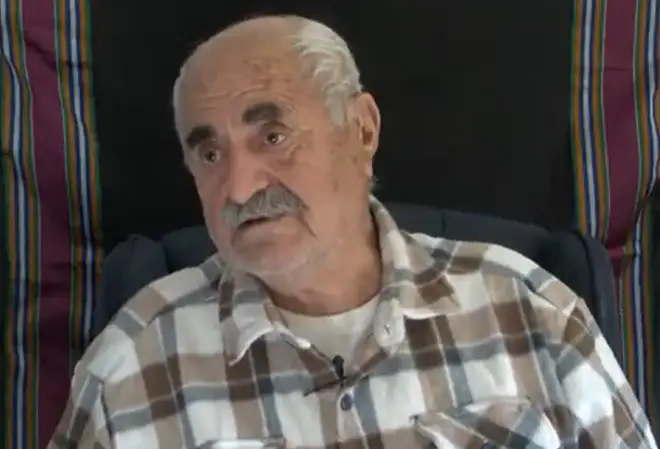
In this video, Pir Hasan Hayri Şanlı explains the importance of cems in Alevi society, their role in the education of the community, and their function in reconciling those who are in conflict. He reflects on these issues through his own family experiences. The narration addresses how dedes are educated by wise dedes, how dede-ship is transmitted, and what kinds of knowledge and responsibilities this path requires.
Pir Hasan Hayri Şanlı explains the teaching of Dört Kapı Kırk Makam as a learning path that advances toward Batınî knowledge. He describes reaching the Gate of marifet as a process of self-knowledge. The Gate of hakikat is defined as the stage of “observing truth through truth.” At this stage, seeing the cemal of Hakk is described as seeing one’s own cemal.
The narration also emphasizes that for the education of the community, the pir must also be educated. It is stated that lineage alone is not sufficient for dede-ship. To guide the community, the pir must know oneself and Hakk and must educate oneself. Pirs, as teachers of the community, are expected to continue learning from their own pirs and to possess a certain level of knowledge and awareness in order to serve as guides on the path.
This recording was made on 18 November 2025 in Dersim, Ovacık, Ziyaret (Jare) Village, with the support of Pir Haber Ajansı (PİRHA), within the framework of the Alevi Encyclopedia’s “Alevism from the Voices of the Path Leaders” series.
Pir Hasan Hayri Şanlı explains the teaching of Dört Kapı Kırk Makam as a learning path that advances toward Batınî knowledge. He describes reaching the Gate of marifet as a process of self-knowledge. The Gate of hakikat is defined as the stage of “observing truth through truth.” At this stage, seeing the cemal of Hakk is described as seeing one’s own cemal.
The narration also emphasizes that for the education of the community, the pir must also be educated. It is stated that lineage alone is not sufficient for dede-ship. To guide the community, the pir must know oneself and Hakk and must educate oneself. Pirs, as teachers of the community, are expected to continue learning from their own pirs and to possess a certain level of knowledge and awareness in order to serve as guides on the path.
This recording was made on 18 November 2025 in Dersim, Ovacık, Ziyaret (Jare) Village, with the support of Pir Haber Ajansı (PİRHA), within the framework of the Alevi Encyclopedia’s “Alevism from the Voices of the Path Leaders” series.
Interviewer
- Eyüp Hanoğlu