Annoucements

Alevis and Civil Society

Since the 1980s, Turkish Alevism has taken shape largely within the organisational matrix of civil society. The transformation from rural, community-oriented ritual practice to the...
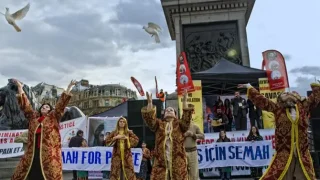
Trafalgar 2013

Mobilisation for Alevi Identity in Britain

This entry presents the social and political conditions for Alevi mobilisation in Britain by drawing on the history, migration background and living conditions of the...
Annoucements

Alevi-Bektaşi

The term Alevi-Bektaşi is today a common term not only in scholarly, political, and media contexts, but also among Alevi and Bektashi communities and organisations...
Annoucements

Hızır / Xızır

In Alevism, Hızır (Xızır) is a meaningful and central figure around which revolve many myths, rituals, hymns, sacred places and lived experiences. It combines many...
Annoucements

Deyiş

In Alevi-Bektashi culture, deyiş are a form of folk literature recited spontaneously and accompanied only by the bağlama during cem ceremonies, alongside the semah, and...
Annoucements

The Identity Repertoire of Alevis and Shared Humanity

In light of the challenges and issues involved in defining Alevi identity, the concept of an “identity repertoire” may be proposed within the framework of...
Annoucements

Necropolitical Violence and Alevis

The concept of necropolitical violence offers valuable potential for clarifying the meaning and significance of the Alevi community’s status as an oppressed minority and its...
Annoucements

Cem Ceremony as a Conflict Resolution Method

This entry explores the significance of the Cem ceremony, which holds profound significance in Alevism, embodying a unique fusion of spirituality, communal values, and cultural...
Annoucements

Social Justice and Alevis: Multidimensional Identity, Forgiveness, and Solidarity

The current contribution explores the multifaceted nature of Alevi identity and its influence on forgiveness, collective action, and responses to intergroup conflict. Alevism, characterized by...
Annoucements

Dâr (Dâra Durmak, Dâra Çekilmek, Dârdan İndirme, Dâr Kurbanı)

In the Alevi belief system, the concept of dâr represents a multi-layered micro-centre where ritual, ethics, theology, and mythology are intricately interwoven. Functioning as a...
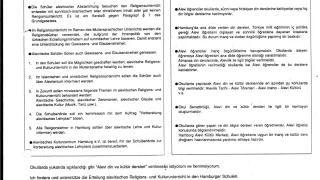
ilk ARU dilekce22.09.1991

The Institutionalization of Alevi Religious Education in Germany

This article examines the emergence of Alevi religious education in Germany, its process of institutionalization, and its current framework of implementation. It first considers how, from the 1980s onward, the...
Annoucements

Why Is It Important to Preserve the Memory of Alevism?

Alevism preserves its identity, faith, and culture through collective memory and memory sites, resisting historical oppression and displacement, while ensuring intergenerational transmission via physical, cultural, and digital means.
Alevilik, köklü bir inanç ve kültürel mirasa sahip olup, barış, adalet ve insan sevgisi gibi evrensel değerleri ön planda tutan
Annoucements

A Historic Turning Point and the Will to Safeguard the Future of Alevi Knowledge

The Alevi Encyclopedia is a vital project enabling Alevis to combat centuries of physical and epistemic violence and assimilation. It seeks to document their cultural heritage using their own voice...
Annoucements

The Alevi Encyclopedia

The Alevi Encyclopedia is a comprehensive initiative that aims to preserve the historical, cultural, and spiritual heritage of Alevism, supporting accurate knowledge production and passing it on to future generations...
Picture of Yayın Kurulu

Editorial Board

Scroll to Top

Donate Now

Learn How to Donate to the Alevi Encyclopedia! Financial contributions to the Alevi Encyclopedia are used for its general expenses with the approval of the Rıza Şehri Academy.