The (Re)Construction of Alevism in the Context of Migration in Europe
Lecture Details
Lecturer
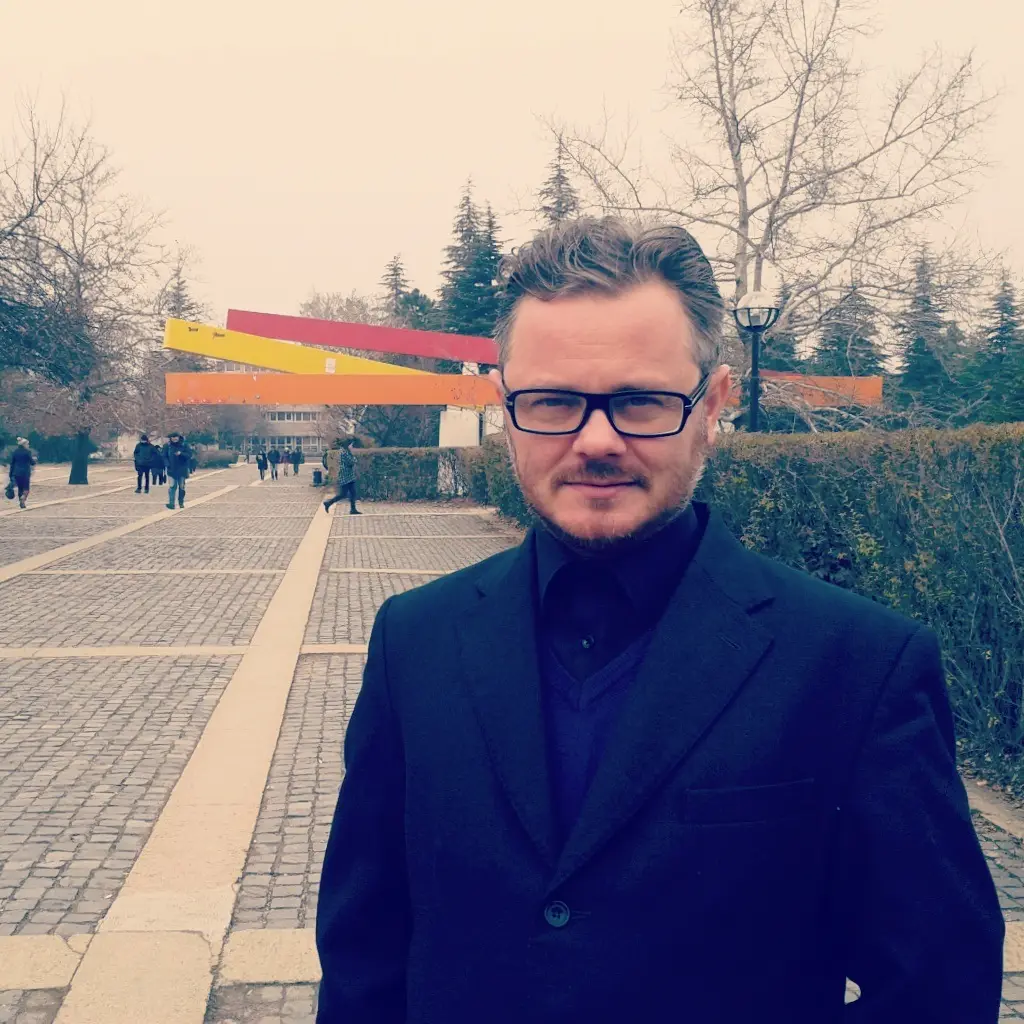
Dr. Besim Can ZIRH, PhD, is Assistant Professor of Sociology at Middle East Technical University (METU), Ankara. He received his PhD in Anthropology from University College London (UCL) in 2012, following undergraduate training in Sociology and graduate study in Political Science at METU. His research lies at the intersection of transnational migration, diaspora studies, the anthropology and sociology of Alevism, and qualitative and ethnographic methodology.
Dr. ZIRH’s work has particularly examined the transformation of Alevi communities through migration between Türkiye and Europe, addressing questions of transnational belonging, political mobilisation, recognition, funerary practices, and the institutionalisation of migrant social life. His research has appeared in Ethnic and Racial Studies and New Perspectives on Turkey, and numerous edited volumes, including The Routledge Handbook of Turkey’s Diasporas. Alongside this long-standing research agenda, his recent work addresses high-skilled migration and international student mobility, migrant and refugee experiences, diaspora politics and external voting.
Dr. ZIRH has held research and teaching positions or fellowships at universities including Bielefeld, Augsburg, Bielefeld, Duisburg-Essen, Humboldt, and Oslo, and has participated in internationally funded research and academic exchange programmes. His academic work is complemented by extensive experience in applied social research and civil-society collaboration, including research design, qualitative fieldwork, project coordination, and policy-oriented reporting for national and international organisations. He has also been actively involved in the Sociological Association of Turkey and the Association for Migration Research (GAR). Across these activities, his work combines ethnographic sensitivity with a sustained interest in how migration, mobility, institutions, and political transformations reshape identities, inequalities, and forms of belonging across national borders.
Lecture Summary
Participants will first be introduced to the historical background of Alevi migration and the emergence of the Alevi revival from the late 1980s onwards. The lecture will then examine how migration has facilitated a shift from local invisibility in Turkey to new forms of public visibility and recognition in Europe. Particular attention will be given to the role of Alevi cultural centres and associations as key institutional spaces in which Alevism has been redefined as a belief system that is articulated in public.
A central focus of the lecture is the examination of funerary practices as a critical lens through which to understand these transformations. Participants will analyse how the challenges of death during migration, particularly the separation between the place of death and burial, stimulated new forms of organisation and contributed to the standardisation and reinterpretation of ritual practices.
By the end of the lecture, participants should be able to:
(1) explain the relationship between transnational migration and the Alevi revival;
(2) identify the key institutions that are shaping contemporary Alevism in Europe; and
(3) evaluate the influence of transnational contexts on the redefinition of Alevi traditions, particularly funeral practices.
Key Concepts
Lecture Transcript
Introduction
Migration does not only transform labour markets, family relations, or questions of identity. It also transforms death-ways, as a repertoire of various social and ritual techniques for dealing with the phenomenon.
One of the most profound yet often overlooked dimensions of migration concerns what happens when people die in the context of migration, away from their homes. The experience of death in the context of migration produces a series of practical, emotional, moral, and institutional questions:
- Where could/should the dead be buried?
- Who could/should conduct the funeral ritual?
- Who could/should assume responsibility for the dead member of the community?
- How can/should the deceased be returned to the homeland?
And perhaps most importantly,
- What happens when a migrant community lacks the institutional structures necessary to provide what it considers a proper funeral?
In this lecture, I approach the transformation and transnationalization of Alevism through the question of funerary practices.
More specifically, I argue that the emergence of what I call the “funeral issue” – related to questions listed above, became one of the central mechanisms through which Alevis in Europe reorganized themselves as a transnationally visible and institutionally organized community.
The story of Alevism in migration is often narrated through broader themes such as identity politics, cultural and religious revival, diaspora mobilization, or struggles for recognition. These dimensions are undoubtedly important. However, approaching the subject through funerary practices allows us to understand these developments from a different and more analytical perspective.
This is simply because, from an anthropological point of view, death reveals the hidden infrastructures of communal life.
For Alevis, the question of funerals became particularly important because migration radically disrupted the socio-spiritual organization of Alevism. Historically, Alevism had largely been organized through village-based communal structures and localized ritual networks. Migration to Turkish cities beginning in the 1950s, followed by labour migration to Europe from the 1960s onward, transformed these structures profoundly.
As Alevis moved away from their villages and ritual environments, they also became separated from the institutional and communal frameworks through which life-cycle rituals — including funerals — had traditionally been conducted.
At the same time, the issue of funerals intersected with another important historical dynamic: the invisibility of Alevism within the Turkish public sphere. Since Alevism lacked officially recognized institutions of worship and ritual infrastructure in Turkey, Alevis in the context of migration often found themselves dependent on Sunni institutional infrastructures (mosques) for funeral services. This dependency produced not only practical difficulties but also experiences of humiliation and exclusion especially during the periods of political polarization, such as in the late 1970s.
Consequently, funerary practices became a central arena through which Alevis began to organize institutions of their own by establishing home-town based funeral funds in Ankara and Istanbul as early as the 1950s, in the context of internal migration.
Alevism, Migration, and the Disruption of Ritual Space
To understand why funerary practices became so significant, it is first necessary to briefly discuss the socio-spiritual organization of Alevism prior to migration, and what exactly was lost — or at least severely disrupted — when Alevis began to move.
Historically, Alevism was deeply connected to village life. Which is also true many other rural background communities in Anatolia. However, the ritual and communal structures in Alevism were embedded within localized social environments shaped by kinship, spiritual lineages, and village-based forms of solidarity.
Alevism functioned not simply as an abstract belief system but as a lived communal order. Rituals were conducted collectively, often within village settings under the leadership of religious specialists known as dedes. The congregation itself — what in Turkish is called the cem — constituted a crucial element of Alevi spiritual life. It is important to note that Alevism did not require a dedicated institutional building similar to a mosque or church. Community life, ritual practice, and spatial belonging were interdependent tightly together at the level of the village.
This socio-spiritual organization depended heavily on continuity between community, geography, and ritual practice. The village was not merely a place of residence. It was also a ritual environment within which social and spiritual life were intertwined. Cem rituals, collective gatherings, sacred music, ritual dance known as semah, and forms of spiritual brotherhood constituted the living fabric of Alevi identity. The dede, as a hereditary spiritual leader, was the custodian of this world — and critically, dedes were embedded within particular communities, lineages, and places.
Beginning in the 1950s, however, Turkey underwent rapid urbanization and internal migration. Large numbers of Alevis migrated from rural regions to urban centers such as Istanbul, Ankara, and Izmir. From the 1960s onward, many also migrated to Europe — particularly to Germany, Austria, France, Sweden, the Netherlands, and the United Kingdom — as part of labor migration programmes. This was the begin ning of what Alevis themselves would come to describe through the emotionally charged concept of gurbet: a condition of displacement, of being away from home, not merely in geographical terms but in a deeper social and existential sense.
Migration profoundly altered the conditions under which Alevism had historically operated. In urban and migrant settings, the village-centred ritual environment became fragmented. Communities were dispersed geographically. Access to dedes became limited. Ritual gatherings became more difficult to organize. In Europe, these difficulties intensified further because migrants were separated not only from their villages but also from the broader social environment in which Alevism had previously been practiced.
Migration therefore produced a crisis of ritual continuity. This crisis was not unique to Alevis, but for Alevis it acquired additional significance because Alevism already occupied an ambiguous and often invisible position within the Turkish public sphere. Throughout much of the republican period in Turkey, Alevism remained politically and institutionally marginalized, invisible. Although millions of Alevis lived in Turkey, Alevism lacked official recognition as a distinct religious category. The public religious sphere was largely organized (explicitly and implicitly) around Sunni Islam. Mosques, religious education, and official religious institutions — including the Directorate of Religious Affairs, the Diyanet — reflected Sunni norms and structures exclusively.
This situation generated a structural form of invisibility. Alevism was socially present but lacked institutional visibility within the state-defined religious order. In village settings, Alevis were often able to sustain communal practices through localized structures that remained below the radar of the state. However, migration exposed the limits of this arrangement. Once Alevis moved into urban and transnational settings, the absence of recognized ritual infrastructures became increasingly difficult to manage. Death, above all, made this absence impossible to ignore.
Death in Gurbet: The Emergence of the Funeral Issue
In Turkish, the term gurbet – which is in binary opposition with the term sıla, refers to the condition of being away from home. It describes not only physical distance but also emotional displacement and existential separation from one’s homeland and familiar social environment. For migrants, death in gurbet carries a particularly powerful symbolic and emotional weight. It disrupts the anticipated narrative of return. It removes the possibility of being buried in ancestral soil, beside one’s own people. It places the management of a fundamentally communal and spiritual process into unfamiliar, often hostile, institutional hands.
Traditionally, in village settings, the worlds of the living and the dead were spatially interconnected. Cemeteries were located close to the village community. The deceased remained symbolically embedded within the social world of the community. Funeral rituals were conducted collectively by familiar religious and communal actors. In Alevism specifically, the process of death involved a rich ritual vocabulary — the dar cem, for example, functioned as a form of spiritual reckoning through which the deceased was collectively mourned and symbolically incorporated into the sphere of the dead. The living community, through its ritual participation, both honored the dead and reaffirmed its own cohesion.
Migration disrupted this relationship radically. In Europe, the place of death and the place of burial became separated across national borders. Migrants frequently died in Germany, France, or other European countries but their bodies were transferred back to Turkey and buried in their villages in Anatolia. Consequently, funerary practices became transnational processes involving transportation, logistics, institutional coordination, and financial organization across multiple countries and bureaucratic systems.
This transformation generated entirely new problems. Families suddenly had to organize the transportation of bodies across countries. Funeral procedures required bureaucratic coordination between consulates, municipalities, airlines, hospitals, and religious authorities. Funeral expenses became extremely costly — often prohibitively so for working-class migrant families. Migrants also needed institutions capable of carrying out rituals and organizing communal support during mourning. For many first-generation migrants, this logistical and emotional burden fell on entirely unprepared shoulders. As a result, death became not only an emotional crisis but also an organizational one for families and communities.
In many migrant communities, associations initially emerged around these practical necessities. Funeral funds, burial associations, and migrant organizations became mechanisms through which communities collectively managed the risks associated with death in migration. The migrant association — the dernek — and the funeral fund — the cenaze fonu — emerged as key institutional responses to the challenge of providing proper funerals in a foreign country. Among Turkish migrants more broadly, these institutions proliferated from the 1970s onward, often beginning as informal arrangements among compatriots from the same village or region.
Among Alevis, however, the issue acquired additional complexity because of the historical invisibility of Alevism. Many Alevis in Europe experienced considerable discomfort — and in some cases open distress — when they were compelled to rely on mosques (as Sunni institutions) for funerary services. Since Alevism lacked officially recognized ritual infrastructures, funeral services often had to be conducted through Sunni institutional frameworks. This situation generated profound anxieties because many Alevis did not consider Sunni ritual forms compatible with their own understanding of belief and communal life.
Consequently, funerary practices became one of the first major arenas in which Alevis attempted to establish autonomous institutional structures. The desire to conduct “our own funerals” — kendi cenazelerimizi kaldırmak — became deeply significant. This phrase carried meanings extending far beyond ritual practice itself. It referred simultaneously to autonomy, visibility, dignity, and communal self-definition. It expressed the aspiration to be recognized as a distinct belief community, not merely as a variant of Sunni Islam, and to have that distinctiveness honored at the most intimate and irreversible moment of social life.
Institutionalization, Cemevis, and the Politics of Ritual
In this context, the establishment of Alevi associations and cemevis acquired particular importance. These institutions gradually became spaces where Alevis could organize funerals according to their own understandings and practices. Funeral organization also strengthened communal solidarity because the entire community frequently participated in mourning processes, transportation logistics, fundraising, and ritual preparation. The practical act of collectively managing death produced social bonds and institutional capacities that extended well beyond funerary needs alone.
Importantly, these institutions often emerged before broader political recognition was achieved. In many cases, practical needs preceded political articulation. Alevis organized around funerary necessities not only because they sought recognition but because death demanded immediate collective solutions.
The cemevi — literally the “gathering house” — became an especially important institution in this regard. In traditional village settings, Alevism had not necessarily depended upon dedicated ritual buildings comparable to mosques or churches. However, migration created a need for institutionalized communal space. In European cities, cemevis emerged as multifunctional centres through which rituals, mourning gatherings, educational programmes, political meetings, and cultural activities could be organized. They provided the spatial anchor that village life had previously offered — a place where Alevis could be Alevis, openly and collectively.
The “funeral issue” played a crucial role in legitimizing these institutions. The ability to provide funerary services — to wash the dead, to conduct the mourning ritual, to organize transportation back to Turkey or, increasingly, to arrange local burial — demonstrated organizational capacity and communal necessity. It gave cemevis a concrete, indispensable function in the daily life of the community. In this sense, death contributed directly to place-making processes. Cemevis became not only ritual spaces but also infrastructures of belonging within migrant life.
At the same time, the funeral issue also transformed Alevism internally. As Alevi organizations expanded in Europe during the late 1980s and 1990s, efforts emerged to standardize and formalize funeral practices. Associations organized educational programmes for religious personnel. Instruction manuals concerning Alevi funerary rituals — the erkân, the codes of conduct for conducting proper ceremonies — were produced and distributed. Ritual procedures became subjects of discussion and negotiation in ways they had rarely been when they were embedded in localized village practice.
This process of formalization reflected broader dynamics within what scholars have called the “Alevi Revival.” The revival of Alevism during the late 1980s and the early 1990s was closely linked to demands for public visibility and recognition.
However, once Alevism entered the public sphere more visibly, new questions emerged with urgency:
- What exactly was Alevism?
- Which practices were authentically Alevi?
- Who possessed the authority to define ritual norms – especially those related to death-ways?
These were not merely academic questions. They had immediate practical stakes, particularly for funerary practices, which required institutional coordination and public organization.
The “funeral issue” therefore intensified these debates about authenticity, authority, and standardization in Alevism.
Because funerary rituals required institutional coordination, they pushed Alevis toward greater formalization. Yet this also produced tensions. Alevism historically contained considerable regional and local diversities. Ritual variations existed across different communities, linguistic groups — Arabic-, Turkish-, Kurdish- and Zaza-speaking — and spiritual lineages. The attempt to institutionalize funerary practices therefore risked reducing local diversity in favour of standardized models that reflected the organizational priorities of the Alevi movement’s most powerful institutional actors.
Migration, in this sense, did not simply preserve tradition. It actively reshaped it. The process of formalizing erkân — the ritual rules for conducting Alevi funerals — was simultaneously an act of cultural reproduction and cultural transformation. What was transmitted was not simply ‘what had always been done’ but a codified, negotiated version of practice, shaped by the conditions and constraints of migrant life in Western Europe.
Funerary Routes and the Transnationalization of Alevism
The emergence of transnational funeral infrastructures contributed significantly to the broader transnationalities of Alevism. Bodies moved repeatedly between Europe and Turkey. Funeral transportation routes connected migrant neighborhoods in Berlin, Cologne, London, or Stockholm with villages and towns in Anatolia. These routes required sustained organizational coordination across borders — between local associations, municipal authorities, airlines, consulates, and families distributed across multiple countries.
In the process, migrant associations evolved into transnational networks. Alevi organizations in Europe established increasingly dense institutional connections with associations in Turkey. Funeral coordination required communication among local associations, municipalities, religious personnel, transportation companies, and families. Over time, these connections became regularized, institutionalized, and expanded beyond funerary services alone. Associations that initially addressed practical communal needs also became centres of cultural, political, and religious activity.
One of the most striking features of this development is what might be called the blueprint function of funerary routes. The organizational networks established to manage the transportation of bodies between Europe and Turkey became templates for the broader transnational institutionalization of Alevism. The routes, contacts, and coordinating mechanisms developed for funerary purposes provided the infrastructure through which other forms of transnational Alevi organization could subsequently flow. In this sense, death quite literally mapped the transnational geography of the Alevi movement.
This dynamic was also visible at the level of individual institutions. The Alevi Funeral Collective established by the Federation of Alevi Unions of Germany — the FAUG — in 2008 is a telling example. This national-level institution, which provided funeral home and fund services to member associations across Germany, was established not merely as a practical service but as a statement of organizational capacity and community self-sufficiency. It demonstrated that Alevis had built the institutional infrastructure to manage their own deaths — and in doing so, to define their own communal boundaries.
Moreover, funerary practices also contributed to broader struggles for recognition. The demand for recognition of cemevis as legitimate places of worship was closely tied to the ability to conduct autonomous religious rituals, including funerals. Thus, the politics of funerary practice intersected with debates concerning citizenship, religious pluralism, and public recognition both in Europe and in Turkey. When Alevi organizations in Germany achieved recognition within public religious and educational frameworks — including the right to teach Alevi religious courses in German public schools, first granted in Berlin in 2002 — funerary autonomy was part of the broader claim to institutional distinctiveness that underwrote this achievement.
The European context was particularly important in this regard. In several European countries, Alevis were able to gain forms of institutional recognition unavailable in Turkey. The discursive environment of multiculturalism in Germany, the availability of public funds for minority religious communities, and the political dynamics of the German Islam Conference all created openings that Alevis were able to benefit from. This visibility strengthened the confidence and organizational capacity of the broader Alevi movement transnationally — and it fed back into demands for recognition in Turkey itself.
There is a profound irony here that deserves emphasis. Alevism, which had long remained relatively invisible within the Turkish national context — constrained by the principle of takiye, the strategic concealment of belief developed over centuries of persecution — acquired new forms of visibility precisely through migration. The migrant condition generated severe difficulties and disruptions, yet it also created opportunities for organizational transformation and public articulation that had not existed within Turkey. Europe became, in a very real sense, the laboratory in which a publicly visible, institutionally organized Alevism was forged.
Funerary practices formed one of the key mechanisms through which this transformation occurred. The management of death required migrants to institutionalize communal relations across borders. It compelled them to establish infrastructures of solidarity, ritual authority, and collective representation. Through these processes, Alevism increasingly evolved from localized and dispersed village-based networks into a transnationally organized public community.
Conclusion
In this lecture, I have approached the transformation and transnationalization of Alevism through the question of funerary practices. Rather than treating death merely as a private or symbolic matter, I have argued that funerary practices became central arenas through which Alevis reorganized communal life under migration.
In the case of Alevis, the management of death in gurbet became one of the mechanisms through which a historically marginalized and locally invisible religious formation transformed into a transnationally organized and publicly articulated community. The routes along which bodies travelled between Europe and Anatolia became, in a very real sense, the routes along which Alevism itself was redefined.
Understanding death in gurbet, then, ultimately helps us understand much larger questions: how migration produces new forms of community, how marginalized religious identities gain visibility through displacement, and how the most intimate dimensions of human experience — birth, belief, and death — are shaped by the structural forces of global movement. These questions extend well beyond the case of Alevis. But it is in the Alevi case that they are illuminated with particular clarity and analytical depth.
References & Further Reading
Zırh, Besim Can. 2027. “Between Invisibility and Hypervisibility: The Political Trajectory of Alevis in Turkey, 1960s–1970s.” In Politics and Society in Cold War Turkey (1960–1980), edited by Halil Akkurt. New York: Berghahn Books. Forthcoming. Berghahn Books.
Zırh, Besim Can. 2026. “A Retrospective Reading of the Journal Yurtseverler Birliği Published in Berlin from 1982 to 1989: The Decade That Transformed Alevism.” New Perspectives on Turkey, First View, 1–18. https://doi.org/10.1017/npt.2026.10083.
Zırh, Besim Can. 2024. “The Alevi Movement in Europe: A Collective Struggle for Visibility, Rights, and Recognition.” In The Routledge Handbook of Turkey’s Diasporas, edited by Ayça Arkılıç and Banu Şenay, 148–160. London: Routledge. https://doi.org/10.4324/9781003269021-13.
Zırh, Besim Can. 2023. “In Between Invisibility and Recognition: The Sivas Massacre.” In A Hundred Years of Republican Turkey: A History in a Hundred Fragments, edited by Alp Yenen and Erik-Jan Zürcher, 389–393. Leiden: Leiden University Press. https://doi.org/10.24415/9789400604551-072.
Zırh, Besim Can. 2022. “Dersim: The Paradox of Disclosing ‘An Open Secret.’” In The Alevis in Modern Turkey and the Diaspora: Recognition, Mobilisation and Transformation, edited by Derya Özkul and Hege Markussen, 78–100. Edinburgh: Edinburgh University Press. https://doi.org/10.3366/edinburgh/9781474492027.003.0005.
Zırh, Besim Can. 2017. “Kırmanciye Beleke: Understanding Alevi Geography in between Spaces of Longing and Belonging.” In Alevis in Europe: Voices of Migration, Culture and Identity, edited by Tözün Issa, 157–172. London: Routledge.
Zırh, Besim Can. 2012. “Following the Dead beyond the ‘Nation’: A Map for Transnational Alevi Funerary Routes from Europe to Turkey.” Ethnic and Racial Studies 35 (10): 1758–1774. https://doi.org/10.1080/01419870.2012.659274.
Zırh, Besim Can. 2008. “Euro-Alevis: From Gastarbeiter to Transnational Community.” In The Making of World Society: Perspectives from Transnational Research, edited by Remus Gabriel Anghel, Eva Gerharz, Gilberto Rescher, and Monika Salzbrunn, 103–132. Bielefeld: transcript Verlag. https://doi.org/10.14361/9783839408353-004.
Production Information
CanoCan Films / Ekin Can Erol
Ekin Can Erol is a German-Kurdish documentary filmmaker and producer with family roots in the Dersim region of Turkey. Based in Potsdam, Germany, he is the founder of CanoCan Films, an independent film production platform focusing on documentary projects exploring history, cultural identity, migration, memory, religion and minority experiences.
Erol holds a degree in History and Philosophy. His academic work also focused on Dersim: his undergraduate thesis examined the events of 1937–1938 and the contested historical interpretations surrounding them, particularly the debate over their classification as an uprising or genocide. His academic background and personal connection to Dersim continue to inform his documentary approach to history, identity and collective memory.
His first documentary, Never Forget – What Is Our Responsibility? (2020), explored Holocaust remembrance and the question of what responsibility younger generations carry in preserving the memory of the crimes of National Socialism. This was followed by Aleviism – A Search for Identity (2021) and Aleviism in the German Diaspora – A Success Story? (2024), focusing on Alevi identity, history, diaspora and intergenerational change.
His latest documentary, Ziyaret – The Voice of Nature (2026), explores sacred places and landscapes within Alevi traditions, particularly in Dersim, combining personal narratives, religious knowledge and academic perspectives. The film was also selected for and screened at the 16th Kurdish Film Festival.
Through CanoCan Films, Erol develops and produces audiovisual formats for cultural, educational and academic projects. His work seeks to connect documentary storytelling with historical research and community perspectives, making underrepresented histories and experiences accessible to wider audiences. In 2026, he was responsible for the technical production and studio work for the first recordings of the Alevi Encyclopedia Open Lecture Series in Berlin.
https://www.canocanfilms.de/ / [email protected]
https://www.youtube.com/@CanoCanFilms
https://www.grin.com/document/373911?srsltid=AU7gw4X8a3njf5rXsbZgR45kRRMDhlVX0EtxEPRD2N9eJQ1mF2zcc-qP
https://ucrisportal.univie.ac.at/de/publications/alevitentum-eine-suche-nach-identit%C3%A4t/
License information
© The Author(s). Unless otherwise stated, entries published in the Alevi Encyclopedia are licensed under a Creative Commons Attribution 4.0 International License.