Kurdish Alevis (Postscript to a TAVO Article [1989] - Revisited)
This entry revisits some of the observations made during anthropological fieldwork in the 1970s in Mazgirt/Dersim and published in TAVO (Tübinger Atlas des Vorderen Orients)...
Remembered and Contemporary Humor Narratives in Dersim
This entry explores remembered and contemporary humor narratives in Dersim, a predominantly Kurdish Alevi region in eastern Turkey. Drawing on ethnographic fieldwork, it highlights how...
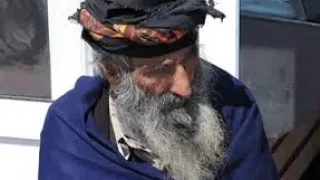
Firik Dede
Firik Dede, who lived during the past century in the Ovacık region of Dersim, occupies a place in Kurdish Alevi collective memory both as a...
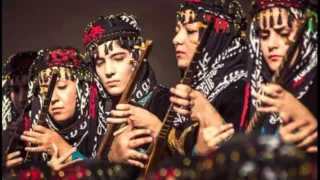
Ahl-é Haqq (Ehli Heq, Ahl-é-Haqîqat, Yarsanism, Kaka‘i)
Yarsanism, also known as Ahl-e Haqq, is a syncretic belief that combines various mystical and gnostic traditions with Islamic, Mazdean, and ancient Kurdish elements. The...
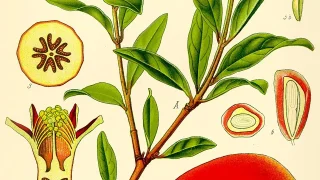
Pomegranates: Ambivalent Symbol of Life and Death
The pomegranate (Punica granatum) was also known in Latin as Malum punicum [1] (“Punic, i.e. Phoenician apple”). In ancient Iranian and Abrahamic religions, as well...
Hako Sûr: A Springtime Ritual among Kurdish Alevis & Armenians in Dersim
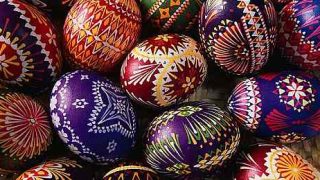
Hako Sûr, also known as the Red Egg Festival, is a now largely forgotten springtime tradition that was once practised by Kurdish Alevi communities in...
Şavak Tribe: Alevi–Sunni Nomadic Community of Dersim
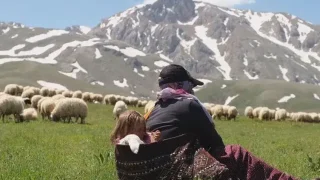
The Şavak tribe occupies a distinctive position within the ethno-cultural mosaic of Dersim, both historically and sociologically. As one of the rare cases in which...
Alevis’ Struggles for Rights: A Human Rights Law Perspective
A town in Central Anatolia. A green Alevi town in the steppe, like an oasis among yellow fields. The reason for my visit was, of...
A Brief History of Bağlama
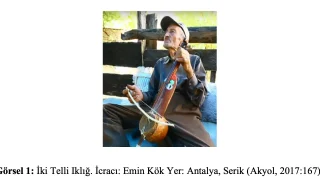
The bağlama is, as in the past, still the most important instrument of our folk music today. It would not be inaccurate to say that...
The Speaking Qur'an (Kur'an-ı Natık) and the Alevis’ Relationship to the Qur'an
In communities denoted by the umbrella term “Alevi”, the saying "the bard's utterance is the Qur’an's essence" highlights how the deyiş and nefes (Alevi and...
The Institutionalization of Alevi Religious Education in Germany
This article examines the emergence of Alevi religious education in Germany, its process of institutionalization, and its current framework of implementation. It first considers how, from the 1980s onward, the...
Why Is It Important to Preserve the Memory of Alevism?
Alevism preserves its identity, faith, and culture through collective memory and memory sites, resisting historical oppression and displacement, while ensuring intergenerational transmission via physical, cultural, and digital means.
Alevilik, köklü bir inanç ve kültürel mirasa sahip olup, barış, adalet ve insan sevgisi gibi evrensel değerleri ön planda tutan
A Historic Turning Point and the Will to Safeguard the Future of Alevi Knowledge
The Alevi Encyclopedia is a vital project enabling Alevis to combat centuries of physical and epistemic violence and assimilation. It seeks to document their cultural heritage using their own voice...
The Alevi Encyclopedia
The Alevi Encyclopedia is a comprehensive initiative that aims to preserve the historical, cultural, and spiritual heritage of Alevism, supporting accurate knowledge production and passing it on to future generations...